CasiA1
Dativ bei Körperteilen
Mir tut der Kopf weh — dative with body parts
Obiettivo di apprendimento
Can describe pain and body issues using dative
Competenze d'esame:AscoltoConversazione
Guarda questi esempi. Riesci a individuare lo schema grammaticale?
Mir tut der Rücken weh.
My back hurts.
Tut dir der Bauch weh?
Does your stomach hurt?
Ihm tun die Augen weh.
His eyes hurt.
Presta attenzione alle parti evidenziate. Cosa hanno in comune?
Im Deutschen verwendet man bei Körperteilen Dativpronomen statt Possessivartikel — anders als im Englischen.
Muster: Dativ-Pronomen + tut/tun ... weh
| Person | Dativ | Beispiel |
|---|---|---|
| ich | mir | Mir tut der Kopf weh. |
| du | dir | Tut dir der Rücken weh? |
| er | ihm | Ihm tut das Bein weh. |
| sie | ihr | Ihr tut der Bauch weh. |
| wir | uns | Uns tun die Augen weh. |
Singular vs. Plural: Ein Körperteil: tut ... weh. Mehrere: tun ... weh: Mir tun die Füße weh.
Wichtig: Mir tut der Kopf weh (nicht mein Kopf) — der Dativ zeigt den Besitzer.
Applica questa grammatica negli esercizi del corso A1
Esercizi di pratica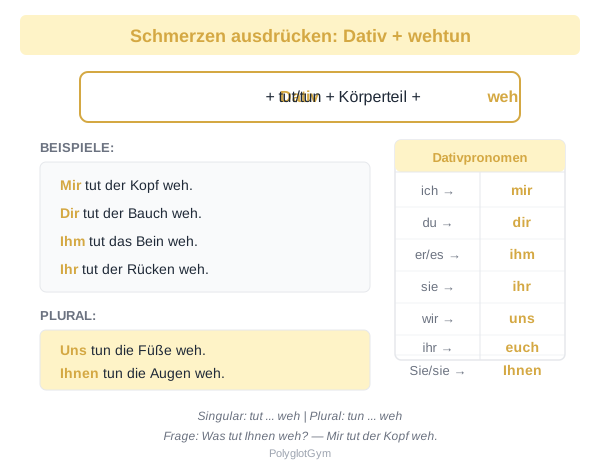
Learners say Mein Kopf tut weh (possessive) instead of Mir tut der Kopf weh (dative). German uses the dative pronoun, not the possessive.
🇬🇧 English speakers: English speakers use possessives: 'Mein Kopf tut weh' instead of 'Mir tut der Kopf weh' — English always uses 'my' with body parts.
Schemi di errore comuni
Incorrect number word form or usage
Review number patterns and exceptions (eins as standalone vs ein before nouns)
Wrong time expression format
Review formal (14:30 Uhr) vs informal (halb drei) time expressions
Incorrect spelling based on pronunciation rules
Review German spelling conventions: ie=[iː], ei=[aɪ], ß after long vowels, ss after short vowels
Mir tut der Rücken weh.
My back hurts.
Mir (dative) + tut + body part + weh. Not: Mein Rücken tut weh.
Tut dir der Bauch weh?
Does your stomach hurt?
Dir (dative for du) + tut + der Bauch + weh.
Ihm tun die Augen weh.
His eyes hurt.
Plural body part: tun (not tut). Ihm = dative for er.
Pratica nel corso
Applica questa grammatica negli esercizi del corso A1