Struttura della fraseA1
W-Fragen
Question words: wie, wo, woher, was, wer
Obiettivo di apprendimento
Can ask basic questions about personal information
Competenze d'esame:AscoltoScritturaConversazione
Guarda questi esempi. Riesci a individuare lo schema grammaticale?
Wie heißen Sie?
What is your name? (formal)
Woher kommst du?
Where do you come from?
Was machst du beruflich?
What do you do for a living?
Presta attenzione alle parti evidenziate. Cosa hanno in comune?
W-Fragen beginnen mit einem Fragewort und erwarten eine inhaltliche Antwort (nicht ja/nein).
Die wichtigsten W-Fragewörter:
| W-Wort | Bedeutung | Beispiel |
|---|---|---|
| wie | how | Wie heißen Sie? |
| wo | where | Wo wohnen Sie? |
| woher | where from | Woher kommen Sie? |
| was | what | Was machen Sie? |
| wer | who | Wer ist das? |
| wann | when | Wann kommst du? |
| warum | why | Warum lernst du Deutsch? |
Wortstellung: W-Wort + Verb (Position 2) + Subjekt + Rest: Wo wohnst du?
Tipp: Wie kombiniert sich oft: wie alt (how old), wie viel (how much), wie lange (how long).
Applica questa grammatica negli esercizi del corso A1
Esercizi di pratica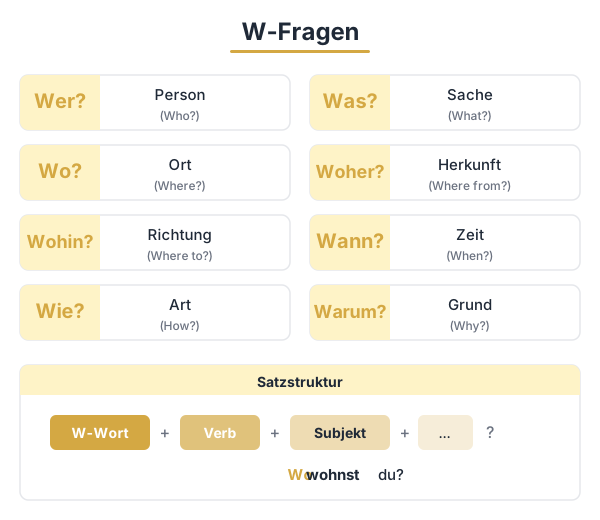
Learners confuse wo (where/location) and woher (where from/origin). Wo wohnst du? vs. Woher kommst du?
🇬🇧 English speakers: English speakers keep English SVO order after the W-word: 'Wo du wohnst?' instead of 'Wo wohnst du?' with verb at position 2.
Schemi di errore comuni
Verb not in second position in main clause
Count positions: element 1 + VERB + rest. The verb is always second.
Wrong word order in subordinate clause
In subordinate clauses (weil, dass, wenn...) the verb goes to the END
Wrong connector or connector type used
Review: coordinating (und, aber, oder) vs subordinating (weil, dass, wenn) conjunctions
Wie heißen Sie?
What is your name? (formal)
Wie (how) + verb at position 2 + subject.
Woher kommst du?
Where do you come from?
Woher asks about origin, not current location.
Was machst du beruflich?
What do you do for a living?
Was (what) asks about things or activities.
Pratica nel corso
Applica questa grammatica negli esercizi del corso A1