VerbsB1
Present perfect vs past simple
The decision system: finished time vs open time, news vs details, for/since vs ago
Learning Goal
I can pick the right past tense by time frame, news value and duration.
Exam Skills:B1 Preliminary ReadingB1 Preliminary Writing
Look at these examples. Can you spot the grammar pattern?
I've worked here since March, and honestly, I applied on a whim.
I've worked here since March, and honestly, I applied on a whim.
Have you two met? — We have. We met at Glastonbury, in the mud.
Have you two met? — We have. We met at Glastonbury, in the mud.
Pay attention to the highlighted parts. What do they have in common?
Three questions decide the tense:
| Question | Perfect | Past simple |
|---|---|---|
| Time finished? | open: today, this week, ever | closed: yesterday, in 2020, ago |
| News or details? | news: I've broken my arm! | details: I fell off my bike. |
| Duration to now? | for/since: I've lived here for years. | finished period: I lived there for a year. |
Typical dialogue flow: perfect opens, simple continues: Have you seen it? — Yes, I saw it on Friday.
Apply this grammar in B1 course exercises
Practice Exercises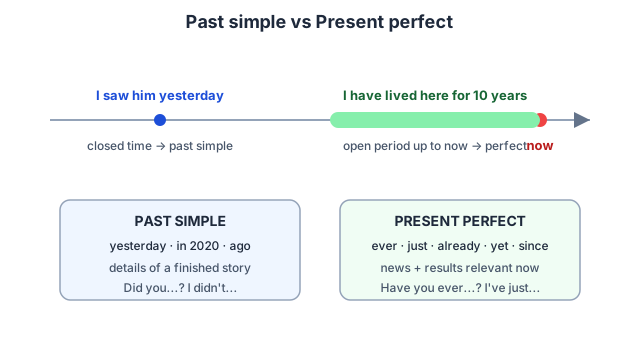
- *I've seen him yesterday → saw
- *I live here since 2020 → I've lived here since 2020
- for/since: for + duration, since + starting point
Common Error Patterns
Tense chosen against the time frame
Closed time → simple; open/duration → perfect
for/since swapped
for two years, since 2024
I've worked here since March, and honestly, I applied on a whim.
I've worked here since March, and honestly, I applied on a whim.
Open duration (perfect) then closed detail (simple).
Have you two met? — We have. We met at Glastonbury, in the mud.
Have you two met? — We have. We met at Glastonbury, in the mud.
Perfect opener, simple for the story details.
Practice in course
Apply this grammar in B1 course exercises