ᲖმნებიB1
The Motion Verb System: Six Preverbs, One Stem
The six directional preverbs (mi-, mo-, she-, ga-, a-, cha-) on the motion stem -di-, plus stacked shemo-/gamo-.
Learning Goal
I can narrate movement precisely - in, out, up, down, toward and away.
Exam Skills:NAEC Georgian B1: ListeningNAEC Georgian B1: Speaking
Look at these examples. Can you spot the grammar pattern?
ლიფტი არ მუშაობს - მეხუთე სართულზე ფეხით ავდივარ.
The elevator doesn't work - I walk up to the fifth floor.
მეტროში ჩავდივარ და სამ გაჩერებაში გავდივარ.
I go down into the metro and get out after three stops.
შემოდი, შემოდი - კარი ღიაა!
Come in, come in - the door is open!
Pay attention to the highlighted parts. What do they have in common?
Navigation in six prefixes
One stem -დი- plus a preverb covers all movement: მი- (thither), მო- (hither), შე- (in), გა- (out), ა- (up), ჩა- (down). They also stack: შემო- (in toward me), გამო- (out toward me). Slavic speakers: this is your в-/вы-/под- system, with one extra axis - toward or away from the speaker.
Apply this grammar in B1 course exercises
Practice Exercises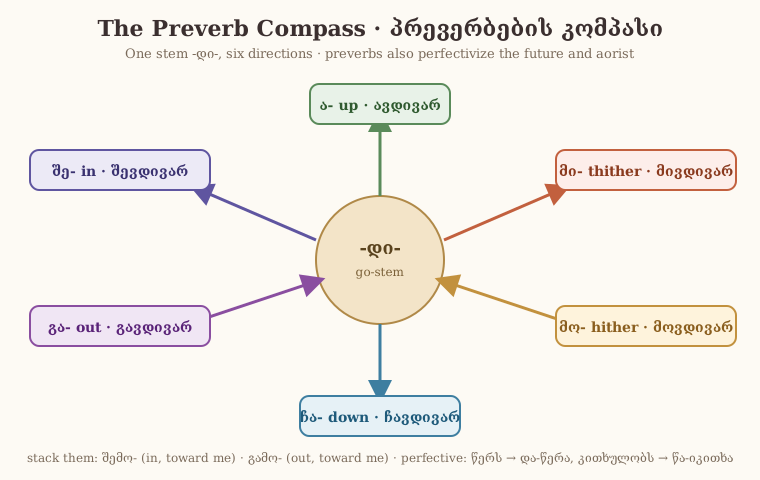
Ignoring the speaker axis (mivdivar to where the listener is - should be movdivar) and translating each preverb verb as a separate word to memorize.
Common Error Patterns
Wrong preverb direction or missing the mo- toward-speaker shade
Map-walk drills: narrate a route through the six preverbs.
ლიფტი არ მუშაობს - მეხუთე სართულზე ფეხით ავდივარ.
The elevator doesn't work - I walk up to the fifth floor.
a- = upward: avdivar 'I go up'. The stem -di- stays the same.
მეტროში ჩავდივარ და სამ გაჩერებაში გავდივარ.
I go down into the metro and get out after three stops.
cha- (down into) and ga- (out of) chain a whole metro ride into two verbs.
შემოდი, შემოდი - კარი ღიაა!
Come in, come in - the door is open!
she- + mo- = shemo-: inward AND toward the speaker - Georgian stacks directions.
Practice in course
Apply this grammar in B1 course exercises