Არსებითი სახელებიA1
The Ergative Case (-ma): First Look
In the aorist past, the subject of an action verb takes -ma: katsma dawera.
Learning Goal
I can recognize the ergative -ma on past-tense subjects in simple sentences.
Exam Skills:NAEC Georgian A1: ReadingNAEC Georgian A1: Speaking
Look at these examples. Can you spot the grammar pattern?
ანამ თქვა.
Ana said it.
ბავშვმა ხაჭაპური შეჭამა.
The child ate the khachapuri.
ვინ დაწერა ეს წერილი?
Who wrote this letter?
Pay attention to the highlighted parts. What do they have in common?
The Ergative Case: First Look
Georgian's famous quirk. In the present, the subject is in the nominative: კაცი წერილს წერს (the man writes a letter). In the aorist past, the subject of an action verb switches to -მა and the object to the nominative: კაცმა წერილი დაწერა (the man wrote a letter).
At A1 you only need to recognize the pattern in common phrases like ვინ თქვა? → ანამ თქვა (Who said it? Ana said it). The full system comes at A2-B1.
Apply this grammar in A1 course exercises
Practice Exercises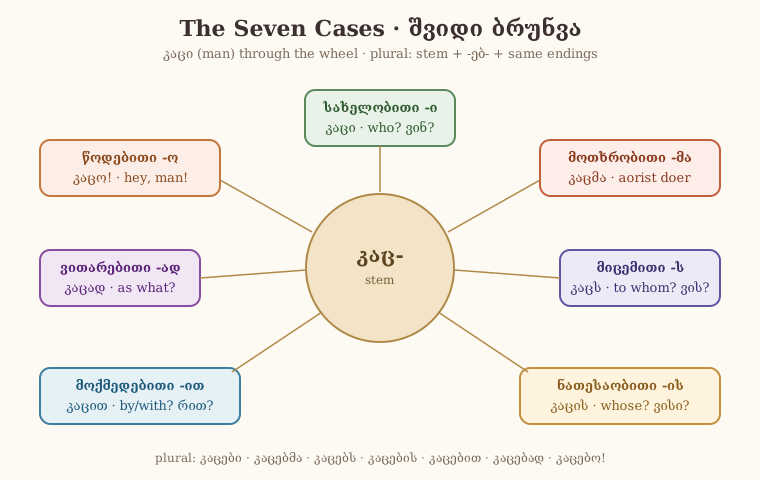
Keeping the nominative subject in the aorist (*კაცი დაწერა) - action verbs need -მა. Adding -მა in the present tense (*კაცმა წერს). Panicking - at A1, recognition is enough.
Common Error Patterns
Nominative subject in aorist or ergative in present
Recognition drills: sort sentences into present (subject -i) vs aorist (subject -ma).
ანამ თქვა.
Ana said it.
ანა + -მ(ა) = ergative subject of the past action verb თქვა.
ბავშვმა ხაჭაპური შეჭამა.
The child ate the khachapuri.
ბავშვ-მა = ergative; ხაჭაპური stays in the nominative.
ვინ დაწერა ეს წერილი?
Who wrote this letter?
ვინ is already ergative-compatible; answer: მეგობარმა დაწერა.
Practice in course
Apply this grammar in A1 course exercises
Put it into practice
Try a free exercise from the courseFrequently asked questions
- When is მოთხრობითი ბრუნვა (-მა) used?
- აწმყოში: კაცი წერილს წერს. წარსულში (აორისტი): კაცმა წერილი დაწერა.
- What are common mistakes with მოთხრობითი ბრუნვა (-მა)?
- Keeping the nominative subject in the aorist (*კაცი დაწერა) - action verbs need -მა. Adding -მა in the present tense (*კაცმა წერს). Panicking - at A1, recognition is enough.