SustantivosA1
Pluralbildung
Basic plural formation patterns in German
Objetivo de aprendizaje
Can form and recognize plural nouns in German
Competencias para el examen:Comprensión lectoraExpresión escrita
Mira estos ejemplos. Puedes identificar el patrón gramatical?
Die Kinder spielen im Park.
The children are playing in the park.
Ich habe zwei Brüder.
I have two brothers.
Die Autos sind teuer.
The cars are expensive.
Presta atención a las partes resaltadas. Qué tienen en común?
Im Deutschen gibt es mehrere Pluralformen — anders als im Englischen gibt es kein einfaches -s für alle Nomen.
Die fünf Pluraltypen:
| Typ | Endung | Singular → Plural |
|---|---|---|
| 1 | -e | der Tisch → die Tische |
| 2 | -en/-n | die Frau → die Frauen |
| 3 | -er | das Kind → die Kinder |
| 4 | -s | das Auto → die Autos |
| 5 | — (keine) | der Lehrer → die Lehrer |
Umlaut: Viele Pluralformen bekommen zusätzlich einen Umlaut: der Bruder → die Brüder, die Mutter → die Mütter.
Wichtig: Im Plural ist der bestimmte Artikel immer die, egal welches Geschlecht: die Tische, die Kinder, die Frauen.
Aplica esta gramática en los ejercicios del curso A1
Ejercicios de práctica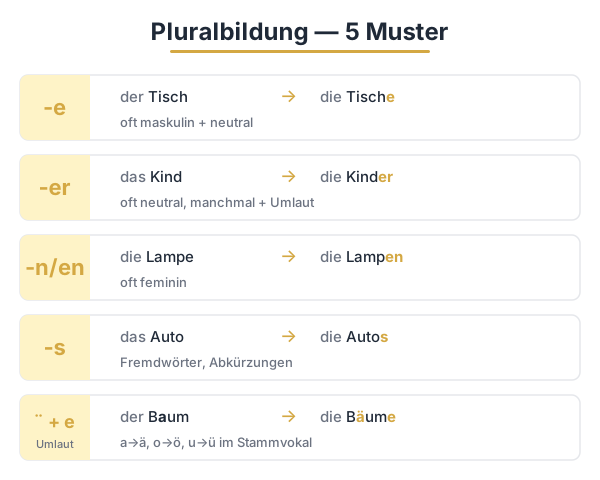
There is no single rule — learners must memorize the plural with each noun. Adding -s (as in English) rarely works.
🇬🇧 English speakers: English speakers default to adding -s for all plurals since that is the dominant English pattern, but German -s plurals are actually rare.
Patrones de errores comunes
Wrong grammatical gender assigned to noun
Learn nouns with their articles (der/die/das) from the start
Incorrect plural ending or umlaut
Review the 5 plural patterns: -e, -er, -en, -s, and no change
Wrong case ending on noun or article
Practice case tables and identify subject/object/indirect object in sentences
Die Kinder spielen im Park.
The children are playing in the park.
Kind → Kinder: -er plural pattern, all plurals take die.
Ich habe zwei Brüder.
I have two brothers.
Bruder → Brüder: umlaut change with no ending added.
Die Autos sind teuer.
The cars are expensive.
Auto → Autos: -s plural, common for foreign words.
Practicar en el curso
Aplica esta gramática en los ejercicios del curso A1