PronombresA2
Personalpronomen im Akkusativ
Personal pronouns as direct objects in the accusative case
Objetivo de aprendizaje
Can replace direct objects with accusative pronouns
Competencias para el examen:Expresión escritaExpresión oral
Mira estos ejemplos. Puedes identificar el patrón gramatical?
Verstehst du mich?
Do you understand me?
Ich liebe dich.
I love you.
Wir kennen ihn seit drei Jahren.
We have known him for three years.
Der Lehrer fragt uns jeden Tag.
The teacher asks us every day.
Presta atención a las partes resaltadas. Qué tienen en común?
When a personal pronoun is the direct object, it changes form — like English I→me, he→him.
| Nominativ | Akkusativ | Beispiel |
|---|---|---|
| ich | mich | Er sieht mich. |
| du | dich | Ich rufe dich an. |
| er | ihn | Kennst du ihn? |
| sie | sie | Ich besuche sie. |
| es | es | Ich finde es gut. |
| wir | uns | Er kennt uns. |
| ihr | euch | Ich frage euch. |
| sie/Sie | sie/Sie | Ich verstehe Sie. |
Only ich, du, er, wir, ihr have distinct accusative forms. Pronoun objects come right after the verb.
Aplica esta gramática en los ejercicios del curso A2
Ejercicios de práctica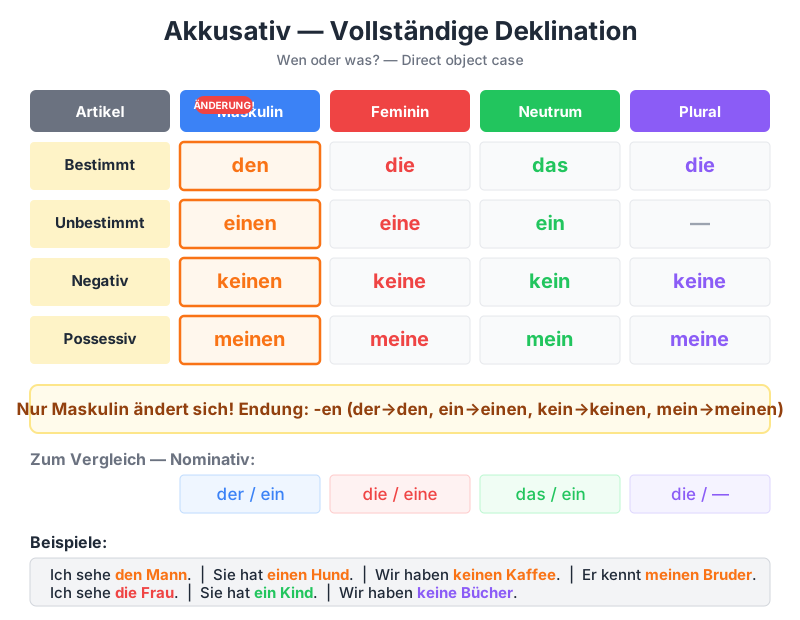
- Nominative instead of accusative: ✗ Ich sehe er → ✓ Ich sehe ihn.
- Confusing mich/mir: mich = accusative, mir = dative.
- Wrong position: ✗ Ich jeden Tag sehe ihn → ✓ Ich sehe ihn jeden Tag.
Patrones de errores comunes
Used wrong case form of pronoun
Review pronoun declension tables (nom/akk/dat)
Pronoun gender doesn't match the noun it replaces
Check the grammatical gender of the noun before choosing er/sie/es
Mixed up du/Sie or ihr/Sie forms
Review formal vs informal address rules
Verstehst du mich?
Do you understand me?
Ich→mich as direct object.
Ich liebe dich.
I love you.
Du→dich.
Wir kennen ihn seit drei Jahren.
We have known him for three years.
Er→ihn.
Der Lehrer fragt uns jeden Tag.
The teacher asks us every day.
Wir→uns.
Practicar en el curso
Aplica esta gramática en los ejercicios del curso A2