PronomsA2
Osobní zájmena – krátké a dlouhé tvary
Short unstressed vs long stressed pronoun forms (mě/mne, ho/jeho, mu/jemu) and the n- forms after prepositions (něj, něho, němu)
Objectif d'apprentissage
I can choose between short, long and n- pronoun forms according to position, emphasis and prepositions.
Compétences pour l'examen:CCE-A2 mluveníCCE-A2 poslech
Regardez ces exemples. Pouvez-vous repérer le schéma grammatical ?
Dám ti to zítra, ale jemu nic nedám.
I'll give it to you tomorrow, but I won't give him anything.
Čekáme na něj před kinem Lucerna.
We are waiting for him in front of the Lucerna cinema.
Znáš Karla? Potkal jsem ho dnes na Andělu.
Do you know Karel? I met him today at Anděl.
Faites attention aux parties en surbrillance. Qu'ont-elles en commun ?
Česká osobní zájmena mají v pádech tři druhy tvarů:
| Užití | 3. pád (on) | 4. pád (on) |
|---|---|---|
| krátký (nepřízvučný, 2. pozice) | Dám mu to. | Vidím ho. |
| dlouhý (důraz, začátek věty) | Jemu nic nedám! | Jeho vidím, tebe ne. |
| po předložce (n-) | k němu | pro něj/něho |
Krátké tvary (mě, tě, ho, mu, se, si) stojí na druhé pozici ve větě a nikdy na začátku. Dlouhé tvary (mne, tebe, jeho, jemu) nesou důraz. Po předložkách se u 3. osoby přidává n-: bez něj, k němu, o ní, s nimi.
Appliquez cette grammaire dans les exercices du cours A2
Exercices de pratique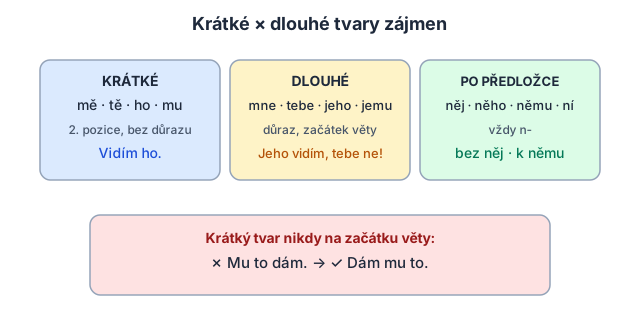
- Short form at sentence start: *Mu to dám → Dám mu to
- Missing n- after prepositions: *bez jeho → bez něj
- Long form without emphasis: Vidím jeho (only with contrast) vs neutral Vidím ho
Schémas d'erreurs fréquents
Short pronoun placed first in the clause
Short forms live in second position - rebuild the sentence around them
Missing n- after a preposition
Preposition + 3rd person = n-form: pro něj, k němu, o ní
Dám ti to zítra, ale jemu nic nedám.
I'll give it to you tomorrow, but I won't give him anything.
ti = short neutral, jemu = long contrastive at the front.
Čekáme na něj před kinem Lucerna.
We are waiting for him in front of the Lucerna cinema.
na + 3rd person pronoun takes the n-form: něj.
Znáš Karla? Potkal jsem ho dnes na Andělu.
Do you know Karel? I met him today at Anděl.
ho sits in second position after 'jsem' — the clitic cluster.
Pratiquer dans le cours
Appliquez cette grammaire dans les exercices du cours A2