Adjektivdeklination Typ 1
Adjective endings after definite articles (der, die, das)
Can add correct adjective endings after definite articles
Look at these examples. Can you spot the grammar pattern?
Der neue Film ist interessant.
The new film is interesting.
Ich lese das dicke Buch.
I'm reading the thick book.
Er gibt der netten Frau die Blumen.
He gives the nice woman the flowers.
Kennst du den neuen Lehrer?
Do you know the new teacher?
Pay attention to the highlighted parts. What do they have in common?
When an adjective comes between an article and a noun, it takes an ending. Type 1: after definite articles (der, die, das) and dieser, jeder, welcher.
| Maskulin | Feminin | Neutrum | Plural | |
|---|---|---|---|---|
| Nom. | der alte | die alte | das alte | die alten |
| Akk. | den alten | die alte | das alte | die alten |
| Dat. | dem alten | der alten | dem alten | den alten |
Simple rule: Use -e in 5 positions (nom. all genders + acc. fem. + acc. neuter). Everything else is -en.
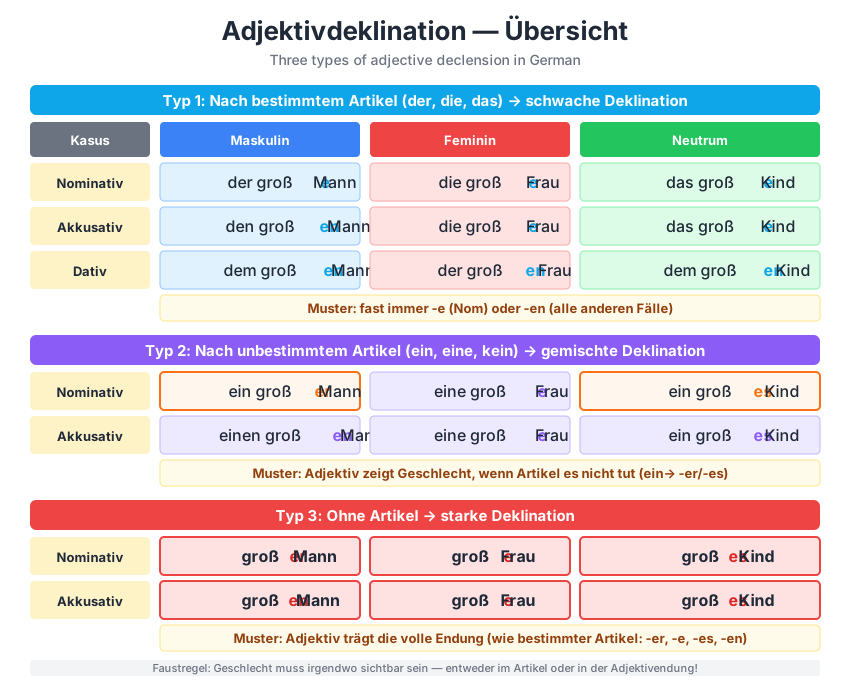
- Missing ending: ✗ der alt Mann → ✓ der alte Mann.
- -e in acc. masculine: ✗ den alte Mann → ✓ den alten Mann.
- -en everywhere: Nominative uses -e: die schöne Stadt.
Common Error Patterns
Wrong adjective declension ending
Check: which article type? Which case? Which gender? Then apply the correct ending table
Incorrect comparative or superlative form
Regular: -er (comparative), am -sten (superlative). Watch for umlauts: alt→älter, groß→größer
Added ending to predicate adjective
Predicate adjectives (after sein/werden) have NO ending: Das Haus ist groß (not großes)
Der neue Film ist interessant.
The new film is interesting.
Nom. masc.: der + -e → der neue Film.
Ich lese das dicke Buch.
I'm reading the thick book.
Acc. neuter: das + -e → das dicke Buch.
Er gibt der netten Frau die Blumen.
He gives the nice woman the flowers.
Dat. fem.: der + -en → der netten Frau.
Kennst du den neuen Lehrer?
Do you know the new teacher?
Acc. masc.: den + -en → den neuen Lehrer.
Practice in course
Apply this grammar in A2 course exercises