Wechselpräpositionen (vollständig)
Two-way prepositions with full accusative/dative contrast
Can use all two-way prepositions with correct case
Look at these examples. Can you spot the grammar pattern?
Das Buch liegt auf dem Tisch.
The book is on the table.
Ich lege das Buch auf den Tisch.
I put the book on the table.
Die Katze sitzt unter dem Stuhl.
The cat sits under the chair.
Er hängt das Bild an die Wand.
He hangs the picture on the wall.
Pay attention to the highlighted parts. What do they have in common?
Nine Wechselpräpositionen take accusative (Wohin?) or dative (Wo?).
| Präposition | Dativ (Wo?) | Akkusativ (Wohin?) |
|---|---|---|
| an | am Tisch | an den Tisch |
| auf | auf dem Tisch | auf den Tisch |
| hinter | hinter dem Haus | hinter das Haus |
| in | im Haus | ins Haus |
| neben | neben der Schule | neben die Schule |
| über | über dem Tisch | über den Tisch |
| unter | unter dem Bett | unter das Bett |
| vor | vor dem Haus | vor das Haus |
| zwischen | zwischen den Häusern | zwischen die Häuser |
Key verb pairs: Location (dat.): stehen, liegen, sitzen, hängen. Motion (acc.): stellen, legen, setzen, hängen.
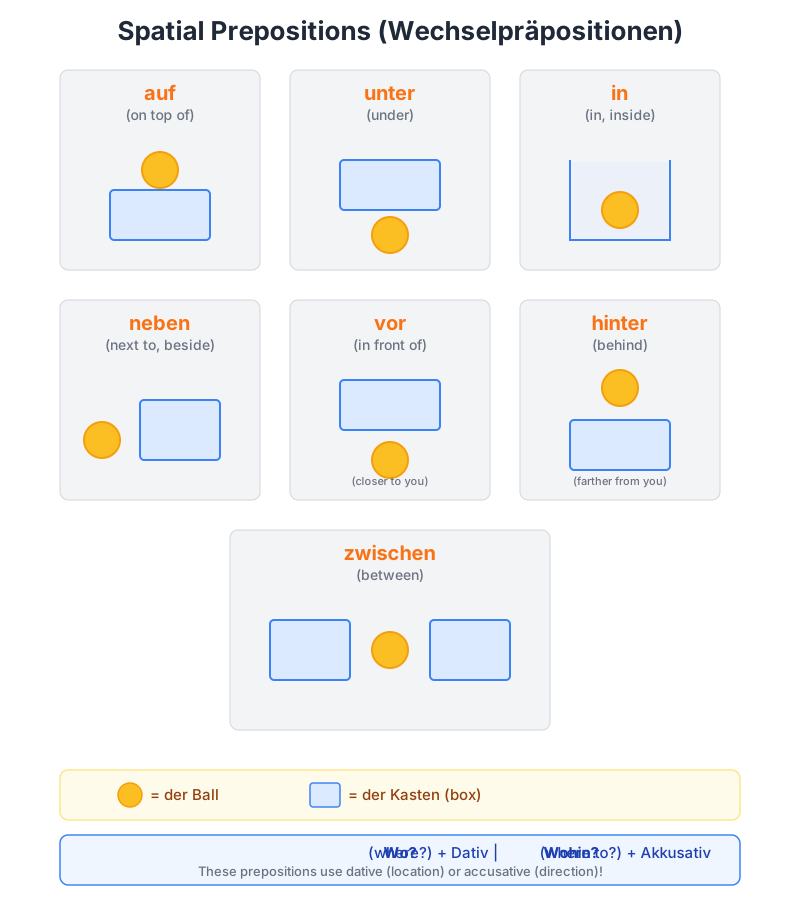
- Dative for motion: ✗ Ich gehe in dem Park → ✓ Ich gehe in den Park.
- Accusative for location: ✗ Ich bin in den Park → ✓ Ich bin im Park.
- Confusing stehen/stellen: stehen = position (dat.); stellen = placing (acc.).
Common Error Patterns
Incorrect number word form or usage
Review number patterns and exceptions (eins as standalone vs ein before nouns)
Wrong time expression format
Review formal (14:30 Uhr) vs informal (halb drei) time expressions
Incorrect spelling based on pronunciation rules
Review German spelling conventions: ie=[iː], ei=[aɪ], ß after long vowels, ss after short vowels
Das Buch liegt auf dem Tisch.
The book is on the table.
Wo? → dative: auf dem Tisch.
Ich lege das Buch auf den Tisch.
I put the book on the table.
Wohin? → accusative: auf den Tisch.
Die Katze sitzt unter dem Stuhl.
The cat sits under the chair.
Wo? → dative: unter dem Stuhl.
Er hängt das Bild an die Wand.
He hangs the picture on the wall.
Wohin? → accusative: an die Wand.
Das Bild hängt an der Wand.
The picture hangs on the wall.
Wo? → dative: an der Wand.
Practice in course
Apply this grammar in A2 course exercises