ДієсловаA1
Модальне дієслово müssen
müssen for obligation and necessity
Мета навчання
Can express obligation and necessity with müssen
Навички для іспиту:ПисьмоГоворіння
Подивіться на ці приклади. Чи можете ви помітити граматичну закономірність?
Ich muss morgen früh aufstehen.
I have to get up early tomorrow.
Du musst nicht kommen.
You don't have to come.
Wir müssen jetzt los.
We have to go now.
Зверніть увагу на виділені частини. Що у них спільного?
Müssen drückt Pflicht oder Notwendigkeit aus (must, have to).
| Person | Form | Person | Form |
|---|---|---|---|
| ich | muss | wir | müssen |
| du | musst | ihr | müsst |
| er/sie/es | muss | sie/Sie | müssen |
Verwendung: Ich muss jetzt gehen. Du musst mehr lernen.
Achtung bei Verneinung:
| Deutsch | Englisch | Bedeutung |
|---|---|---|
| nicht müssen | don't have to | Du musst nicht kommen. (optional) |
| nicht dürfen | must not | Du darfst nicht rauchen. (verboten) |
Nicht müssen ≠ must not! Dieser Fehler ist sehr häufig.
Застосуйте цю граматику у вправах курсу A1
Вправи для практики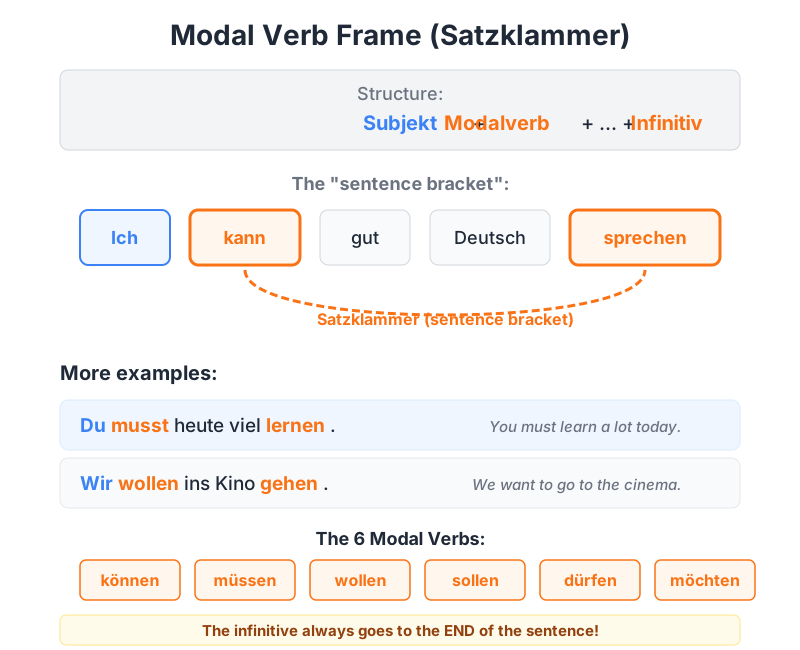
Learners translate 'must not' as muss nicht, but muss nicht means 'don't have to'. Use darf nicht for prohibition.
🇬🇧 English speakers: English speakers translate 'must not' as 'muss nicht' — but 'muss nicht' means 'don't have to'; the correct translation for 'must not' is 'darf nicht'.
Типові помилки
Incorrect verb ending for the subject
Review verb conjugation tables and practice matching endings to pronouns
Forgot stem vowel change in irregular verbs
Practice stem-changing verbs (e→i, e→ie, a→ä) with flashcards
Verb placed in wrong position
Remember: V2 in main clauses, verb-final in subordinate clauses
Ich muss morgen früh aufstehen.
I have to get up early tomorrow.
Müssen expresses necessity: muss + infinitive at the end.
Du musst nicht kommen.
You don't have to come.
Nicht müssen = don't have to (optional), NOT 'must not'.
Wir müssen jetzt los.
We have to go now.
Losmüssen — colloquial for 'have to leave': los replaces a full infinitive.
Практикувати в курсі
Застосуйте цю граматику у вправах курсу A1