ДієсловаA2
Зворотні дієслова
Verbs with reflexive pronouns referring back to the subject
Мета навчання
Can use reflexive verbs for daily routines and feelings
Навички для іспиту:ПисьмоГоворіння
Подивіться на ці приклади. Чи можете ви помітити граматичну закономірність?
Ich freue mich auf das Wochenende.
I'm looking forward to the weekend.
Er wäscht sich die Hände.
He washes his hands.
Bitte setzen Sie sich!
Please sit down! (formal)
Ich kann mir das nicht vorstellen.
I can't imagine that.
Зверніть увагу на виділені частини. Що у них спільного?
Reflexive verbs use a pronoun that refers back to the subject. The reflexive pronoun can be accusative or dative.
| Person | Akk. | Dat. |
|---|---|---|
| ich | mich | mir |
| du | dich | dir |
| er/sie/es | sich | sich |
| wir | uns | uns |
| ihr | euch | euch |
| sie/Sie | sich | sich |
Accusative reflexive (no other object): sich freuen, sich setzen, sich ärgern, sich beeilen, sich erinnern.
Dative reflexive (with another accusative object): sich etwas wünschen, sich etwas vorstellen, sich etwas kaufen.
Rule: If the verb already has a direct object, the reflexive is dative. If the reflexive IS the only object, it's accusative.
Застосуйте цю граматику у вправах курсу A2
Вправи для практики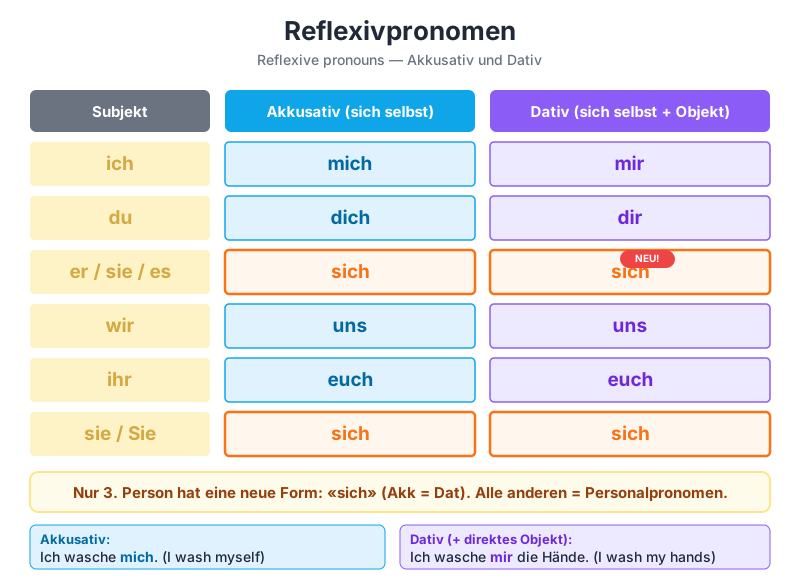
- Omitting the reflexive: ✗ Ich freue → ✓ Ich freue mich.
- Wrong case: ✗ Ich wasche mich die Hände → ✓ Ich wasche mir die Hände.
- Forgetting sich for 3rd person: ✗ Er erinnert ihn → ✓ Er erinnert sich.
Типові помилки
Incorrect verb ending for the subject
Review verb conjugation tables and practice matching endings to pronouns
Forgot stem vowel change in irregular verbs
Practice stem-changing verbs (e→i, e→ie, a→ä) with flashcards
Verb placed in wrong position
Remember: V2 in main clauses, verb-final in subordinate clauses
Ich freue mich auf das Wochenende.
I'm looking forward to the weekend.
Sich freuen auf + acc. Reflexive mich is accusative.
Er wäscht sich die Hände.
He washes his hands.
Reflexive sich is dative; die Hände is accusative.
Bitte setzen Sie sich!
Please sit down! (formal)
Sich setzen = to sit down.
Ich kann mir das nicht vorstellen.
I can't imagine that.
Sich vorstellen (imagine) takes dative: mir.
Wir müssen uns beeilen.
We have to hurry.
Sich beeilen. Uns is accusative reflexive.
Практикувати в курсі
Застосуйте цю граматику у вправах курсу A2