Будова реченняA1
Питання з W-словами (W-Fragen)
Question words: wie, wo, woher, was, wer
Мета навчання
Can ask basic questions about personal information
Навички для іспиту:АудіюванняПисьмоГоворіння
Подивіться на ці приклади. Чи можете ви помітити граматичну закономірність?
Wie heißen Sie?
What is your name? (formal)
Woher kommst du?
Where do you come from?
Was machst du beruflich?
What do you do for a living?
Зверніть увагу на виділені частини. Що у них спільного?
W-Fragen beginnen mit einem Fragewort und erwarten eine inhaltliche Antwort (nicht ja/nein).
Die wichtigsten W-Fragewörter:
| W-Wort | Bedeutung | Beispiel |
|---|---|---|
| wie | how | Wie heißen Sie? |
| wo | where | Wo wohnen Sie? |
| woher | where from | Woher kommen Sie? |
| was | what | Was machen Sie? |
| wer | who | Wer ist das? |
| wann | when | Wann kommst du? |
| warum | why | Warum lernst du Deutsch? |
Wortstellung: W-Wort + Verb (Position 2) + Subjekt + Rest: Wo wohnst du?
Tipp: Wie kombiniert sich oft: wie alt (how old), wie viel (how much), wie lange (how long).
Застосуйте цю граматику у вправах курсу A1
Вправи для практики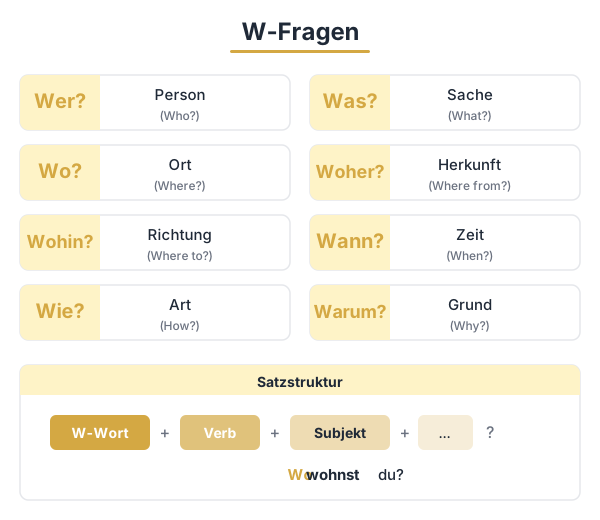
Learners confuse wo (where/location) and woher (where from/origin). Wo wohnst du? vs. Woher kommst du?
🇬🇧 English speakers: English speakers keep English SVO order after the W-word: 'Wo du wohnst?' instead of 'Wo wohnst du?' with verb at position 2.
Типові помилки
Verb not in second position in main clause
Count positions: element 1 + VERB + rest. The verb is always second.
Wrong word order in subordinate clause
In subordinate clauses (weil, dass, wenn...) the verb goes to the END
Wrong connector or connector type used
Review: coordinating (und, aber, oder) vs subordinating (weil, dass, wenn) conjunctions
Wie heißen Sie?
What is your name? (formal)
Wie (how) + verb at position 2 + subject.
Woher kommst du?
Where do you come from?
Woher asks about origin, not current location.
Was machst du beruflich?
What do you do for a living?
Was (what) asks about things or activities.
Практикувати в курсі
Застосуйте цю граматику у вправах курсу A1