Tính từB1
Adjektivdeklination Typ 2+3
Adjective endings after indefinite articles (Type 2) and without articles (Type 3)
Mục tiêu học tập
Can use adjective endings after indefinite and zero articles
Kỹ năng thi cử:ĐọcViết
Hãy xem các ví dụ sau. Bạn có nhận ra quy tắc ngữ pháp không?
Ein junger Mann wartet draußen.
A young man is waiting outside.
Sie trinkt kalten Kaffee.
She drinks cold coffee.
Ich habe eine interessante Idee.
I have an interesting idea.
Mit frischer Milch schmeckt es besser.
It tastes better with fresh milk.
Chú ý các phần được đánh dấu. Chúng có điểm gì chung?
Type 2 — After ein, kein, mein:
| Mask. | Fem. | Neutr. | Plural | |
|---|---|---|---|---|
| Nom. | ein alter | eine alte | ein altes | keine alten |
| Akk. | einen alten | eine alte | ein altes | keine alten |
| Dat. | einem alten | einer alten | einem alten | keinen alten |
Type 3 — No article:
| Mask. | Fem. | Neutr. | Plural | |
|---|---|---|---|---|
| Nom. | kalter | frische | kaltes | neue |
| Akk. | kalten | frische | kaltes | neue |
| Dat. | kaltem | frischer | kaltem | neuen |
Key insight: The adjective must show the gender/case signal. If the article shows it (Type 1), adjective is weak (-e/-en). If not (Type 2/3), adjective carries the signal.
Áp dụng ngữ pháp này vào các bài tập khóa học B1
Bài tập thực hành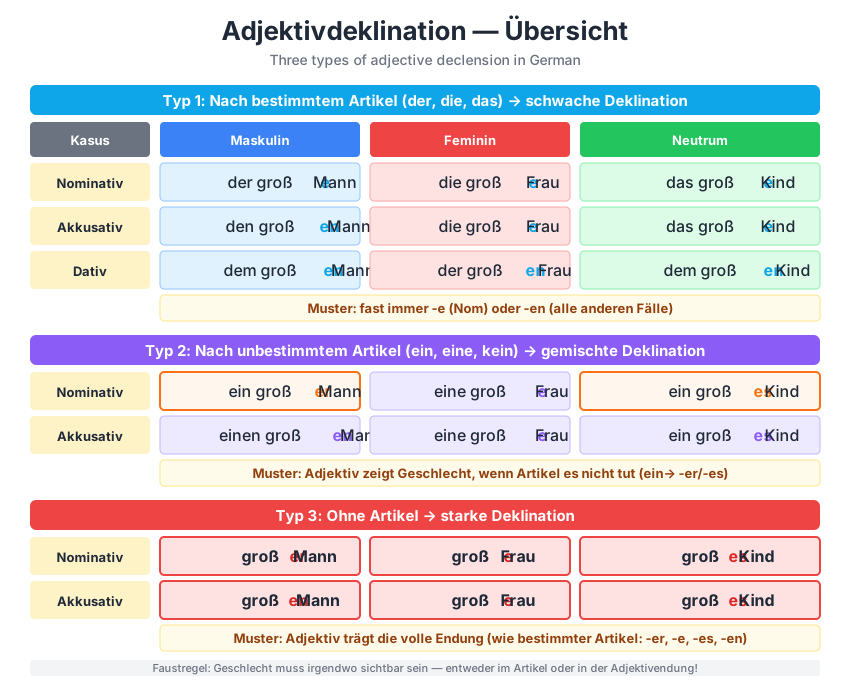
- Type 1 endings after ein: ✗ ein alte Mann → ✓ ein alter Mann.
- Signal principle: der alte Mann (-e) vs. ein alter Mann (-er).
- Type 3 dative: ✗ mit kalter Kaffee → ✓ mit kaltem Kaffee.
Các lỗi thường gặp
Wrong adjective declension ending
Check: which article type? Which case? Which gender? Then apply the correct ending table
Incorrect comparative or superlative form
Regular: -er (comparative), am -sten (superlative). Watch for umlauts: alt→älter, groß→größer
Added ending to predicate adjective
Predicate adjectives (after sein/werden) have NO ending: Das Haus ist groß (not großes)
Ein junger Mann wartet draußen.
A young man is waiting outside.
Type 2: ein has no ending → adjective -er.
Sie trinkt kalten Kaffee.
She drinks cold coffee.
Type 3: no article → -en (masc. acc.).
Ich habe eine interessante Idee.
I have an interesting idea.
Type 2: eine shows feminine → -e.
Mit frischer Milch schmeckt es besser.
It tastes better with fresh milk.
Type 3 dat. fem.: no article → -er.
Luyện tập trong khóa học
Áp dụng ngữ pháp này vào các bài tập khóa học B1