Động từA1
Modalverb 'wollen'
wollen for wishes and intentions
Mục tiêu học tập
Can express wishes and intentions with wollen
Kỹ năng thi cử:ViếtNói
Hãy xem các ví dụ sau. Bạn có nhận ra quy tắc ngữ pháp không?
Ich will Deutsch lernen.
I want to learn German.
Was willst du am Wochenende machen?
What do you want to do on the weekend?
Wir wollen nächstes Jahr nach Japan reisen.
We want to travel to Japan next year.
Chú ý các phần được đánh dấu. Chúng có điểm gì chung?
Wollen drückt einen starken Wunsch oder eine feste Absicht aus (want to).
| Person | Form | Person | Form |
|---|---|---|---|
| ich | will | wir | wollen |
| du | willst | ihr | wollt |
| er/sie/es | will | sie/Sie | wollen |
Verwendung: Ich will nach Deutschland fahren. Wir wollen heute Abend ausgehen.
Wollen vs. möchten:
| wollen | möchten | |
|---|---|---|
| Ton | direkt, bestimmt | höflich, zurückhaltend |
| Beispiel | Ich will das! | Ich möchte das, bitte. |
Tipp: Im Restaurant oder Geschäft lieber möchten verwenden. Wollen klingt bei Bitten unhöflich.
Áp dụng ngữ pháp này vào các bài tập khóa học A1
Bài tập thực hành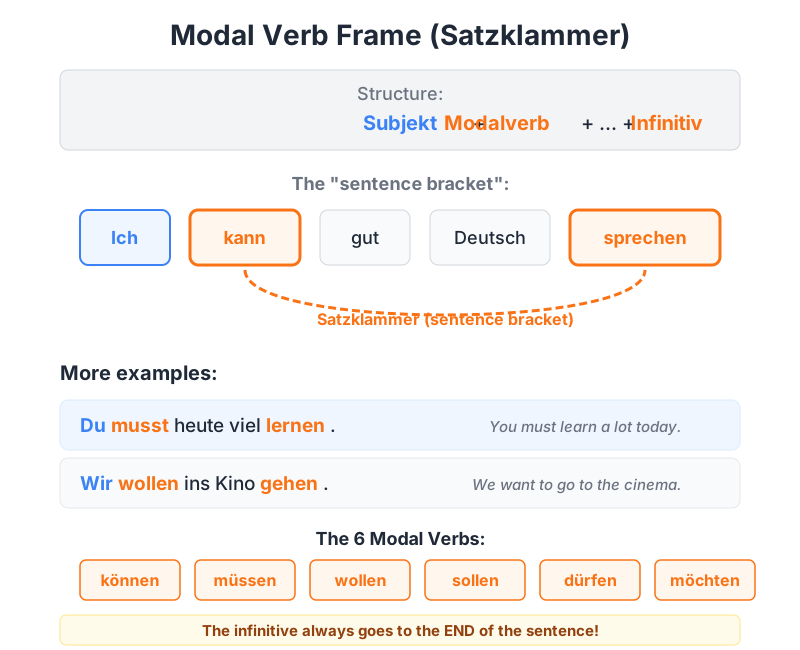
Learners use wollen in polite contexts: Ich will ein Bier sounds demanding. Use Ich möchte ein Bier in restaurants.
🇬🇧 English speakers: English speakers use wollen as a false friend for English 'will' (future), saying 'Ich will gehen' to mean 'I will go' instead of 'I want to go'.
Các lỗi thường gặp
Incorrect verb ending for the subject
Review verb conjugation tables and practice matching endings to pronouns
Forgot stem vowel change in irregular verbs
Practice stem-changing verbs (e→i, e→ie, a→ä) with flashcards
Verb placed in wrong position
Remember: V2 in main clauses, verb-final in subordinate clauses
Ich will Deutsch lernen.
I want to learn German.
Wollen + infinitive at the end: a firm intention.
Was willst du am Wochenende machen?
What do you want to do on the weekend?
Willst du + infinitive at the end for asking about plans.
Wir wollen nächstes Jahr nach Japan reisen.
We want to travel to Japan next year.
Wollen for future intentions: wollen + time/place + infinitive.
Luyện tập trong khóa học
Áp dụng ngữ pháp này vào các bài tập khóa học A1