动词B2
Вид: общефактическое значение
Imperfective for bare facts: Ты читал «Анну Каренину»? (experience), annulled results (приходил = came and left), and two-way actions
学习目标
I can use the general-factual imperfective for experience and annulled results.
考试技能:ТРКИ 2
观察以下示例,你能发现语法规律吗?
Вы когда-нибудь пробовали настоящие сибирские пельмени?
Have you ever tried real Siberian pelmeni?
Пока тебя не было, заходила соседка - просила лестницу.
While you were out, the neighbour dropped by - she asked for the ladder.
注意高亮部分,它们有什么共同点?
Most learners hear that the perfective is for finished actions and the imperfective for unfinished ones. Then a Russian asks Ты читал «Анну Каренину»? about a book you finished years ago, and the rule seems to break. It does not: the imperfective can also simply state that an action happened, without caring about its result. Grammarians call this the general-factual meaning.
| Meaning | Example | What it says |
|---|---|---|
| experience: did it ever happen? | Ты читал «Анну Каренину»? | the fact matters, not the result |
| a result that has been undone | К нам приходил сантехник. | he came and has gone again |
| Кто открывал окно? | someone opened it, and now it is shut |
Experience: "Have you ever...?"
Where English uses the present perfect for experience ("Have you ever been to Baikal?"), Russian uses the imperfective past: Ты когда-нибудь был на Байкале?, Вы смотрели «Иронию судьбы»? The perfective would ask about a specific result: Ты прочитал книгу, которую я дал? ("Did you finish the book I lent you?").
The undone result
Compare two ways of saying a plumber came:
- Сантехник пришёл: he arrived and is still here.
- Сантехник приходил: he came and has left.
This works with verbs whose result can be reversed: coming and going, opening and closing, taking and returning. Кто брал мою ручку? means the pen is back, and someone used it. Кто взял мою ручку? means it is gone.
Why it matters
The general-factual imperfective is one of the main things that separates a B2 speaker from a B1 speaker. Getting it wrong does not make you incomprehensible, but it changes the message: Ты прочитал «Анну Каренину»? sounds like a teacher checking homework.
Typical mistakes
- Asking about experience with a perfective: say Ты читал...?, Ты был...?, Ты пробовал пельмени?
- Saying пришёл about a visitor who has already left: use приходил.
在 B2 课程练习中应用此语法
练习题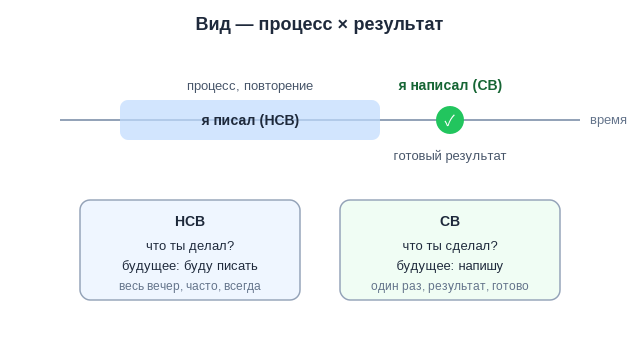
- СВ in experience questions: ты *прочитал когда-нибудь...? → читал
- приходил/пришёл annulment missed
Вы когда-нибудь пробовали настоящие сибирские пельмени?
Have you ever tried real Siberian pelmeni?
пробовали: experience question, imperfective.
Пока тебя не было, заходила соседка - просила лестницу.
While you were out, the neighbour dropped by - she asked for the ladder.
заходила: came and already left.
这个主题的检测还在准备中
问问索菲
在课程中练习
在 B2 课程练习中应用此语法