SlovesaB2
Trpný rod s modálními slovesy
Passive voice combined with modal verbs
Cíl učení
Can combine passive voice with modal verbs in formal texts
Zkouškové dovednosti:ČteníPsaní
Podívejte se na tyto příklady. Dokážete rozpoznat gramatický vzorec?
Das Formular muss bis morgen ausgefüllt werden.
The form must be filled out by tomorrow.
Das Problem kann gelöst werden.
The problem can be solved.
Die Aufgabe sollte bis Freitag erledigt werden.
The task should be completed by Friday.
Der Text darf nicht verändert werden.
The text may not be changed.
Zaměřte se na zvýrazněné části. Co mají společného?
Modal verbs combine with passive infinitive: modal + Partizip II + werden.
| Aktiv | Passiv mit Modal |
|---|---|
| Man muss das Formular ausfüllen. | Das Formular muss ausgefüllt werden. |
| Man kann das Problem lösen. | Das Problem kann gelöst werden. |
| Man soll die Regel beachten. | Die Regel soll beachtet werden. |
Structure: Subject + modal (conjugated) + ... + Partizip II + werden (infinitive at end).
Past: Das Formular musste ausgefüllt werden (Präteritum of modal).
Very common in formal/bureaucratic German: instructions, regulations, academic writing.
Použijte tuto gramatiku ve cvičeních kurzu B2
Procvičovací cvičení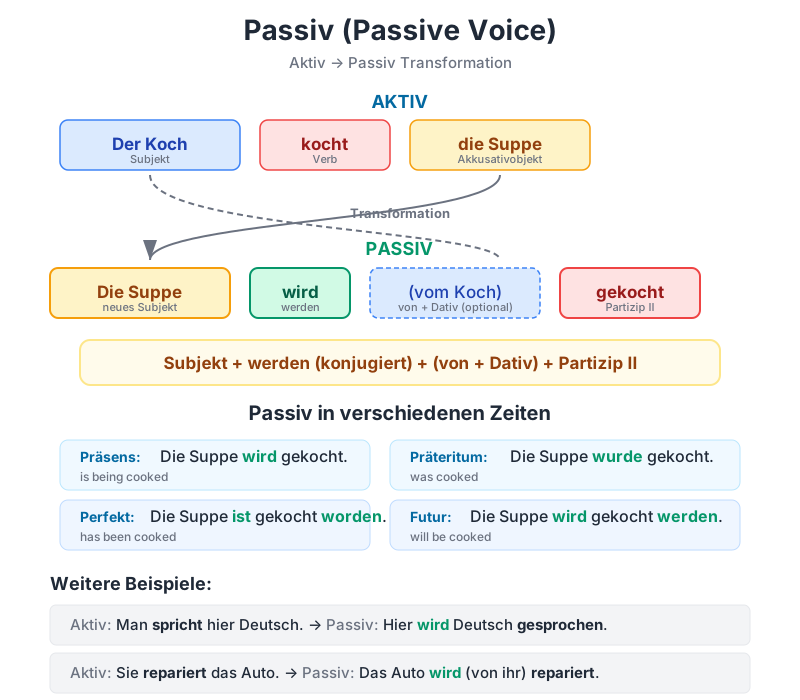
- Wrong infinitive: ✗ muss gebaut geworden → ✓ muss gebaut werden.
- Word order: Partizip II + werden both at the end, werden last.
- Active meaning: Er muss arbeiten (active) ≠ Es muss gemacht werden (passive).
Časté chyby
Incorrect verb ending for the subject
Review verb conjugation tables and practice matching endings to pronouns
Forgot stem vowel change in irregular verbs
Practice stem-changing verbs (e→i, e→ie, a→ä) with flashcards
Verb placed in wrong position
Remember: V2 in main clauses, verb-final in subordinate clauses
Das Formular muss bis morgen ausgefüllt werden.
The form must be filled out by tomorrow.
Muss + Partizip II + werden.
Das Problem kann gelöst werden.
The problem can be solved.
Kann + Partizip II + werden.
Die Aufgabe sollte bis Freitag erledigt werden.
The task should be completed by Friday.
Sollte (Konj. II) + passive = polite instruction.
Der Text darf nicht verändert werden.
The text may not be changed.
Darf nicht + passive = prohibition.
Procvičit v kurzu
Použijte tuto gramatiku ve cvičeních kurzu B2