VerbsA1
Past simple: regular verbs
Finished past actions with -ed; spelling and pronunciation of -ed; didn't and did questions
Learning Goal
I can narrate finished past events with regular verbs and ask about them with did.
Exam Skills:A2 Key ListeningA2 Key Writing
Look at these examples. Can you spot the grammar pattern?
Yesterday we visited Tower Bridge and walked along the Thames.
Yesterday we visited Tower Bridge and walked along the Thames.
Did you call the hotel? — I did, but nobody answered.
Did you call the hotel? — I did, but nobody answered.
Pay attention to the highlighted parts. What do they have in common?
The past simple closes a finished story:
| Type | Pattern | Example |
|---|---|---|
| + | verb + ed (all persons) | We watched a film yesterday. |
| − | didn't + verb | She didn't like it. |
| ? | Did + subject + verb | Did you enjoy it? |
Spelling: stop→stopped, study→studied, live→lived. Pronunciation of -ed: /t/ (watched), /d/ (played), /ɪd/ (wanted, needed). After did the verb returns to base form.
Apply this grammar in A1 course exercises
Practice Exercises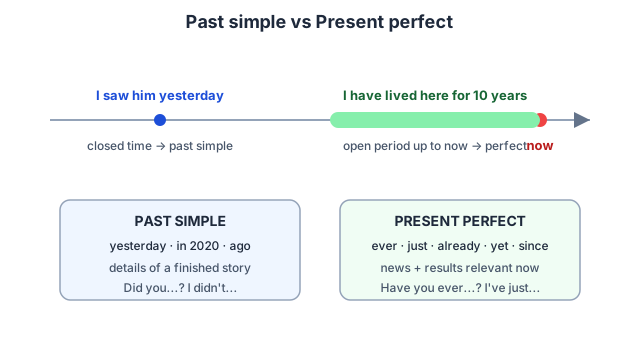
- Double past: *Did you watched? → Did you watch?
- *She didn't liked it → didn't like
- -ed as /ɪd/ everywhere: watched is one syllable
Common Error Patterns
Past form kept after did/didn't
did carries the past: Did you watch?
-ed always as /ɪd/
/ɪd/ only after t/d: wanted, needed
Yesterday we visited Tower Bridge and walked along the Thames.
Yesterday we visited Tower Bridge and walked along the Thames.
Finished yesterday-story in the past simple.
Did you call the hotel? — I did, but nobody answered.
Did you call the hotel? — I did, but nobody answered.
did question + emphatic short answer I did.
Practice in course
Apply this grammar in A1 course exercises