Sentence StructureC1
Erweiterte Partizipialattribute
The left-branching monster: die im Keller gefundenen, seit Jahren vermissten Akten; building, reading and unwinding into relative clauses
Learning Goal
I can read, build and unwind extended participial attributes including the gerundive.
Exam Skills:ReadingWriting
Look at these examples. Can you spot the grammar pattern?
Die von der Jury einstimmig ausgewählte Bewerberin kommt aus Leipzig.
The applicant unanimously chosen by the jury comes from Leipzig.
Die noch zu klärenden Fragen verschieben wir auf die nächste Sitzung.
The questions still to be clarified we postpone to the next meeting.
Pay attention to the highlighted parts. What do they have in common?
Zwischen Artikel und Nomen passt ein halber Satz:
| Partizipialattribut | = Relativsatz |
|---|---|
| die im Keller gefundenen Akten | die Akten, die im Keller gefunden wurden |
| der seit Stunden wartende Kunde | der Kunde, der seit Stunden wartet |
| das zu lösende Problem | das Problem, das gelöst werden muss |
Lese-Strategie: Artikel merken → zum Nomen springen → die Füllung rückwärts auflösen. Partizip I = aktiv-gleichzeitig, Partizip II = passiv/vollendet, zu + Partizip I = Notwendigkeit/Möglichkeit (Gerundivum). Schriftsprache pur - gesprochen nimmt man den Relativsatz.
Apply this grammar in C1 course exercises
Practice Exercises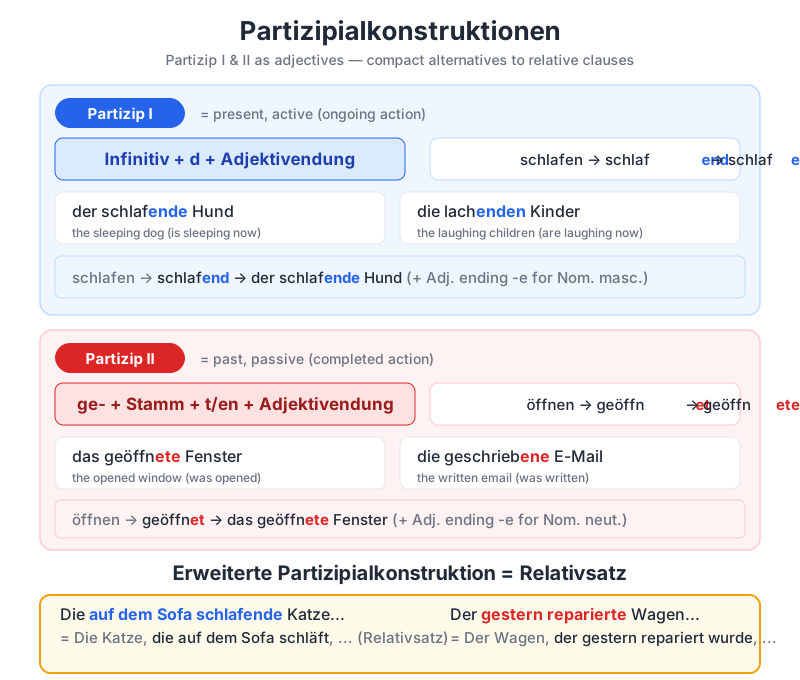
- Reading linearly and losing the noun: jump article → noun first
- Gerundive misread as active: das zu lösende Problem = must be solved
Common Error Patterns
Linear parsing loses the head noun
Article → noun → unwind backwards
zu + Partizip I read as active
Gerundive = necessity/possibility passive
Die von der Jury einstimmig ausgewählte Bewerberin kommt aus Leipzig.
The applicant unanimously chosen by the jury comes from Leipzig.
Partizip II attribute with agent and adverb inside.
Die noch zu klärenden Fragen verschieben wir auf die nächste Sitzung.
The questions still to be clarified we postpone to the next meeting.
Gerundive: noch zu klärende = still needing clarification.
Practice in course
Apply this grammar in C1 course exercises
Frequently asked questions
- When is Erweiterte Partizipialattribute used?
- Lese-Strategie: Artikel merken → zum Nomen springen → die Füllung rückwärts auflösen. Partizip I = aktiv-gleichzeitig, Partizip II = passiv/vollendet, zu + Partizip I = Notwendigkeit/Möglichkeit (Gerundivum). Schriftsprache pur - gesprochen nimmt man den Relativsatz.
- What are common mistakes with Erweiterte Partizipialattribute?
- Reading linearly and losing the noun: jump article → noun first Gerundive misread as active: das zu lösende Problem = must be solved