VerbsB1
Passiv Präteritum & Perfekt
Past passive: wurde + Partizip II and ist + Partizip II + worden
Learning Goal
Can describe past events using passive voice
Exam Skills:ReadingWriting
Look at these examples. Can you spot the grammar pattern?
Das Gebäude wurde 1990 gebaut.
The building was built in 1990.
Der Patient ist operiert worden.
The patient has been operated on.
Die Straße wurde wegen Bauarbeiten gesperrt.
The street was closed due to construction.
Die Tür ist geschlossen.
The door is closed. (state)
Pay attention to the highlighted parts. What do they have in common?
Passive in past tenses: Präteritum (written) and Perfekt (spoken).
| Präteritum Passiv | Perfekt Passiv | |
|---|---|---|
| Formation | wurde + Partizip II | ist + Partizip II + worden |
| Example | Das Haus wurde gebaut. | Das Haus ist gebaut worden. |
Präteritum: ich wurde gefragt, du wurdest, er wurde, wir wurden, ihr wurdet, sie wurden.
Note: worden (not geworden) in Perfekt passive. Ist gebaut worden (passive) vs. ist Arzt geworden (became).
Zustandspassiv: sein + Partizip II: Die Tür ist geöffnet (state/result).
Apply this grammar in B1 course exercises
Practice Exercises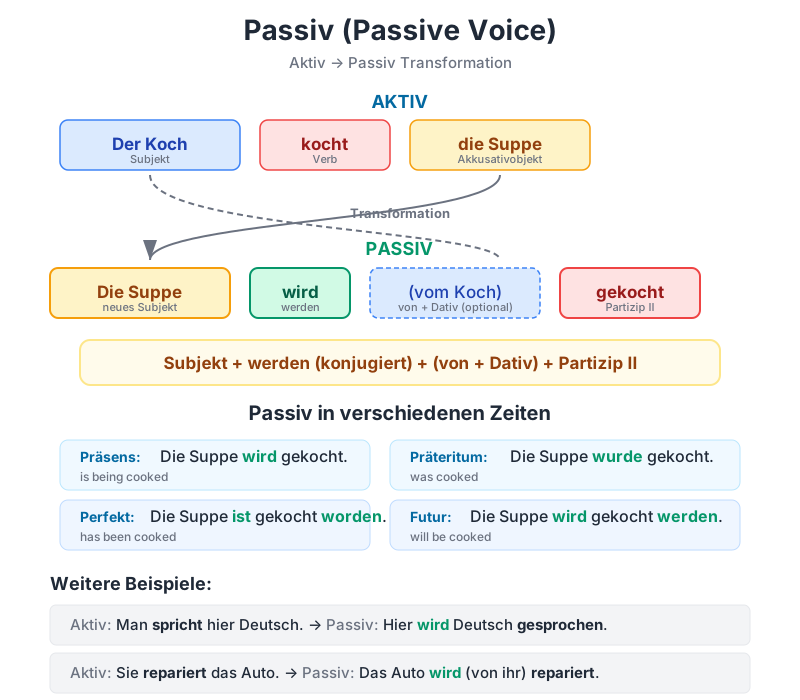
- Geworden instead of worden: ✗ ist gebaut geworden → ✓ ist gebaut worden.
- Vorgangs- vs. Zustandspassiv: wird geöffnet (process) ≠ ist geöffnet (state).
- Wrong auxiliary: Always ist...worden, never hat...worden.
Common Error Patterns
Incorrect verb ending for the subject
Review verb conjugation tables and practice matching endings to pronouns
Forgot stem vowel change in irregular verbs
Practice stem-changing verbs (e→i, e→ie, a→ä) with flashcards
Verb placed in wrong position
Remember: V2 in main clauses, verb-final in subordinate clauses
Das Gebäude wurde 1990 gebaut.
The building was built in 1990.
Präteritum passive: wurde + Partizip II.
Der Patient ist operiert worden.
The patient has been operated on.
Perfekt passive: ist + Partizip II + worden.
Die Straße wurde wegen Bauarbeiten gesperrt.
The street was closed due to construction.
Wurde gesperrt.
Die Tür ist geschlossen.
The door is closed. (state)
Zustandspassiv: current state, not process.
Practice in course
Apply this grammar in B1 course exercises
Frequently asked questions
- When is Passiv Präteritum & Perfekt used?
- Passive in past tenses: Präteritum (written) and Perfekt (spoken).
- How is Passiv Präteritum & Perfekt formed?
- Präteritum: ich wurde gefragt, du wurdest, er wurde, wir wurden, ihr wurdet, sie wurden. Note: worden (not geworden) in Perfekt passive. Ist gebaut worden (passive) vs. ist Arzt geworden (became). Zustandspassiv: sein + Partizip II : Die Tür ist geöffnet (state/result).
- What are common mistakes with Passiv Präteritum & Perfekt?
- Geworden instead of worden: ✗ ist gebaut geworden → ✓ ist gebaut worden . Vorgangs- vs. Zustandspassiv: wird geöffnet (process) ≠ ist geöffnet (state). Wrong auxiliary: Always ist...worden , never hat...worden .