VerbosB1
Konjunktiv II (würde + Infinitiv)
The würde-construction for Konjunktiv II of most verbs
Objetivo de aprendizaje
Can express hypothetical situations using würde + infinitive
Competencias para el examen:Expresión escritaExpresión oral
Mira estos ejemplos. Puedes identificar el patrón gramatical?
Wenn es nicht regnen würde, würden wir spazieren gehen.
If it weren't raining, we would go for a walk.
Würden Sie mir bitte die Speisekarte bringen?
Would you please bring me the menu?
Ich würde gern mehr reisen.
I would like to travel more.
Was würdest du an meiner Stelle tun?
What would you do in my place?
Presta atención a las partes resaltadas. Qué tienen en común?
While sein, haben, and modals use their own Konj. II forms, most verbs use würde + Infinitiv.
| ich würde machen | wir würden machen |
| du würdest machen | ihr würdet machen |
| er/sie/es würde machen | sie/Sie würden machen |
Why? For most verbs, the 'real' Konj. II = Präteritum (ambiguous). Würde is unambiguous.
Unreal conditions: Wenn ich Zeit hätte, würde ich dich besuchen.
Polite: Würden Sie bitte das Fenster öffnen?
Wishes: Ich würde gern nach Japan reisen.
Aplica esta gramática en los ejercicios del curso B1
Ejercicios de práctica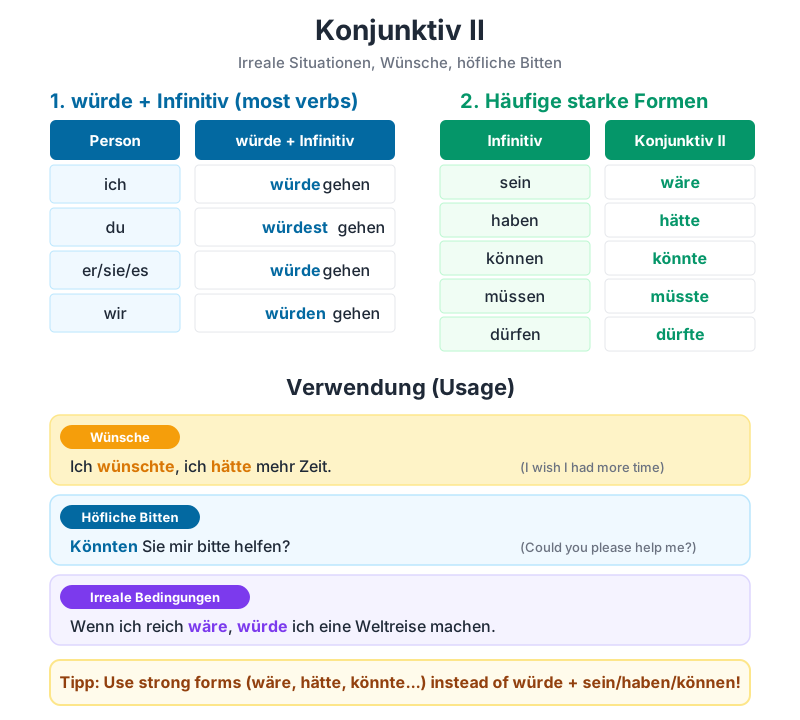
- Double würde: ✗ Wenn ich haben würde, würde ich... → ✓ Wenn ich hätte, würde ich....
- Würde with sein/haben: ✗ würde sein → ✓ wäre.
- Word order: Infinitive at the end: würde morgen gern gehen.
Patrones de errores comunes
Incorrect verb ending for the subject
Review verb conjugation tables and practice matching endings to pronouns
Forgot stem vowel change in irregular verbs
Practice stem-changing verbs (e→i, e→ie, a→ä) with flashcards
Verb placed in wrong position
Remember: V2 in main clauses, verb-final in subordinate clauses
Wenn es nicht regnen würde, würden wir spazieren gehen.
If it weren't raining, we would go for a walk.
Würde in both clauses (regnen has no distinct Konj. II).
Würden Sie mir bitte die Speisekarte bringen?
Would you please bring me the menu?
Very polite request.
Ich würde gern mehr reisen.
I would like to travel more.
Würde gern = polite wish.
Was würdest du an meiner Stelle tun?
What would you do in my place?
Hypothetical question.
Practicar en el curso
Aplica esta gramática en los ejercicios del curso B1