Estructura de oracionesB1
Relativsätze (Dativ/Präpositional)
Relative clauses with dative and prepositional relative pronouns
Objetivo de aprendizaje
Can form relative clauses with dative and prepositions
Competencias para el examen:Comprensión lectoraExpresión escrita
Mira estos ejemplos. Puedes identificar el patrón gramatical?
Der Kollege, dem ich das Buch geliehen habe, ist nett.
The colleague I lent the book to is nice.
Die Stadt, in der ich aufgewachsen bin, ist klein.
The city I grew up in is small.
Die Freunde, mit denen ich reise, kommen aus Berlin.
The friends I travel with come from Berlin.
Das Restaurant, in dem wir gestern waren, war toll.
The restaurant we were at yesterday was great.
Presta atención a las partes resaltadas. Qué tienen en común?
Building on nom./acc. relative clauses, we add dative and prepositional relative pronouns.
| Maskulin | Feminin | Neutrum | Plural | |
|---|---|---|---|---|
| Dativ | dem | der | dem | denen |
Dative: when pronoun = indirect object or dative verb: Der Mann, dem ich geholfen habe.
Preposition + pronoun: Preposition comes before the pronoun: Die Stadt, in der ich wohne.
Special plural dative: denen (not den): Die Leute, denen ich es erzählt habe.
Aplica esta gramática en los ejercicios del curso B1
Ejercicios de práctica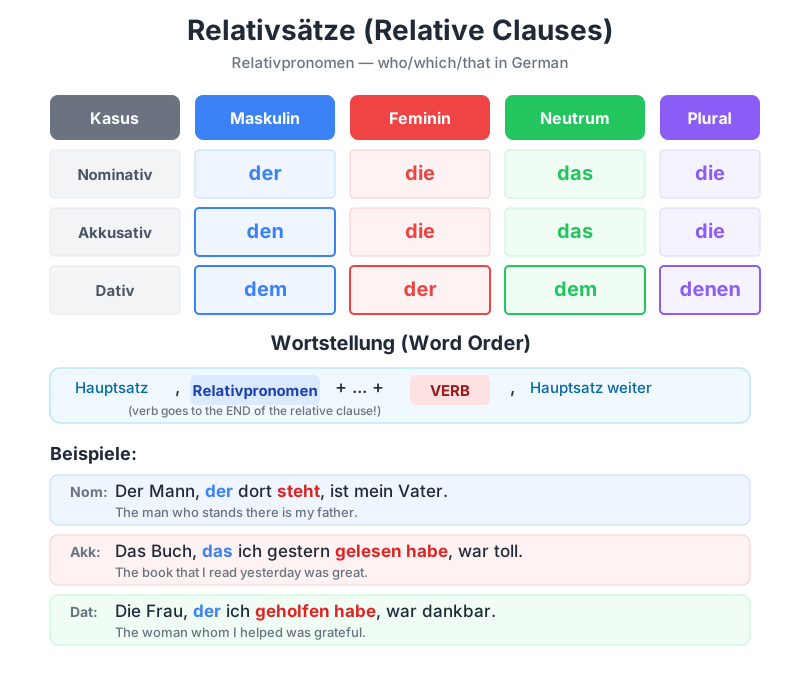
- Wrong plural dative: ✗ Die Kinder, den ich helfe → ✓ Die Kinder, denen ich helfe.
- Preposition position: ✗ Die Stadt, die ich in wohne → ✓ Die Stadt, in der ich wohne.
- Confusing der: Die Frau, der ich helfe — der is fem. dative, not masc. nom.
Patrones de errores comunes
Verb not in second position in main clause
Count positions: element 1 + VERB + rest. The verb is always second.
Wrong word order in subordinate clause
In subordinate clauses (weil, dass, wenn...) the verb goes to the END
Wrong connector or connector type used
Review: coordinating (und, aber, oder) vs subordinating (weil, dass, wenn) conjunctions
Der Kollege, dem ich das Buch geliehen habe, ist nett.
The colleague I lent the book to is nice.
Dem = dative. Kollege is masculine.
Die Stadt, in der ich aufgewachsen bin, ist klein.
The city I grew up in is small.
In + dative: Stadt is feminine → in der.
Die Freunde, mit denen ich reise, kommen aus Berlin.
The friends I travel with come from Berlin.
Mit + dative plural: denen.
Das Restaurant, in dem wir gestern waren, war toll.
The restaurant we were at yesterday was great.
In + dative: Restaurant is neuter → in dem.
Practicar en el curso
Aplica esta gramática en los ejercicios del curso B1