VerbosA1
Trennbare Verben
Separable verbs: aufstehen, anfangen, einkaufen
Objetivo de aprendizaje
Can use separable verbs to describe daily routines
Competencias para el examen:Expresión escritaExpresión oral
Mira estos ejemplos. Puedes identificar el patrón gramatical?
Ich stehe jeden Tag um 7 Uhr auf.
I get up at 7 o'clock every day.
Wann fängt der Film an?
When does the movie start?
Kaufst du heute ein?
Are you going shopping today?
Presta atención a las partes resaltadas. Qué tienen en común?
Trennbare Verben haben ein Präfix, das sich in Hauptsätzen vom Verb löst und ans Satzende wandert.
Häufige trennbare Präfixe:
| Präfix | Verb | Beispielsatz |
|---|---|---|
| auf- | aufstehen | Ich stehe um 7 Uhr auf. |
| an- | anfangen | Der Kurs fängt um 9 an. |
| ein- | einkaufen | Wir kaufen im Supermarkt ein. |
| mit- | mitkommen | Kommst du mit? |
| zu- | zuhören | Hör bitte zu! |
| aus- | ausgehen | Wir gehen heute Abend aus. |
Satzklammer: Konjugiertes Verb an Position 2, Präfix am Ende. Alles andere steht dazwischen: Ich stehe jeden Morgen um sieben Uhr auf.
Aplica esta gramática en los ejercicios del curso A1
Ejercicios de práctica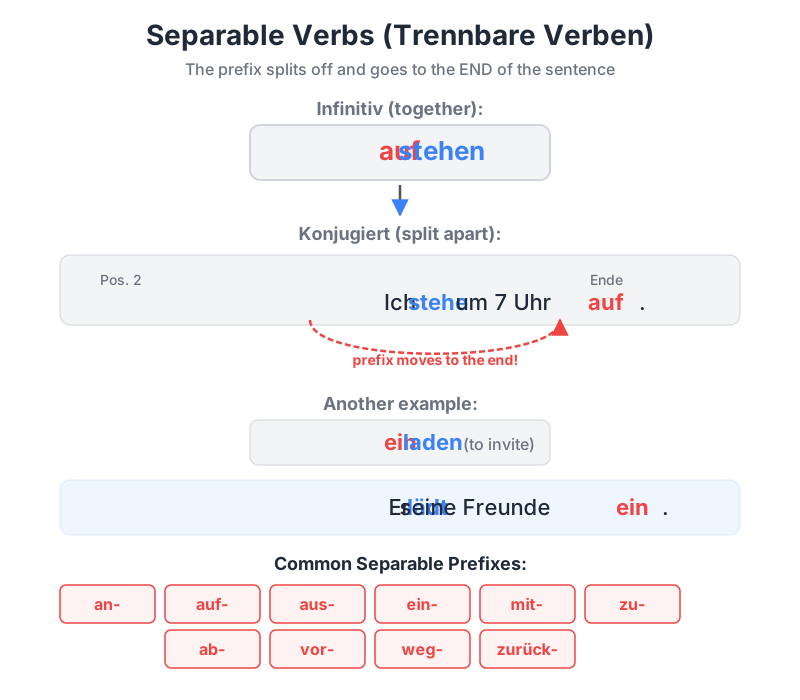
Learners forget to move the prefix to the end: Ich aufstehe instead of Ich stehe auf.
🇬🇧 English speakers: English speakers have no concept of separable verbs and frequently forget to move the prefix to the end: 'Ich aufstehe' instead of 'Ich stehe auf'.
Patrones de errores comunes
Didn't separate the prefix in main clause
In main clauses, prefix goes to the END: Ich STEHE um 7 Uhr AUF (not: Ich aufstehe)
Separated prefix placed incorrectly
The prefix goes to the very end of the main clause, after all objects and adverbs
Confused separable and inseparable prefix verbs
Separable: an, auf, aus, ein, mit, vor, zu, ab. Inseparable: be, emp, ent, er, ge, miss, ver, zer
Ich stehe jeden Tag um 7 Uhr auf.
I get up at 7 o'clock every day.
aufstehen: the prefix auf moves to the end of the sentence.
Wann fängt der Film an?
When does the movie start?
anfangen: an goes to the end. Note stem change: a → ä.
Kaufst du heute ein?
Are you going shopping today?
einkaufen: ein goes to the end, even in questions.
Practicar en el curso
Aplica esta gramática en los ejercicios del curso A1