Estructura de oracionesB2
Temporalsätze (als/wenn/nachdem/bevor/während)
Complex temporal clauses with precise time relationships
Objetivo de aprendizaje
Can express precise time relationships with temporal clauses
Competencias para el examen:Comprensión lectoraExpresión escrita
Mira estos ejemplos. Puedes identificar el patrón gramatical?
Als ich ein Kind war, lebten wir in Hamburg.
When I was a child, we lived in Hamburg.
Nachdem er aufgestanden war, frühstückte er.
After he had gotten up, he had breakfast.
Während ich kochte, räumte er auf.
While I cooked, he tidied up.
Seitdem er hier wohnt, fühlt er sich wohl.
Since he has lived here, he feels good.
Presta atención a las partes resaltadas. Qué tienen en común?
B2 requires mastery of all temporal subordinating conjunctions with correct tense sequences.
| Konjunktion | Bedeutung | Tense Rule |
|---|---|---|
| als | when (single past event) | Präteritum/Perfekt |
| wenn | when(ever), if | Present or repeated past |
| nachdem | after | Tense shift required |
| bevor/ehe | before | Same tense both clauses |
| während | while | Same tense both clauses |
| bis | until | Same tense both clauses |
| seitdem | since (point in time) | Present tense in both |
Als vs. wenn: als = one specific past event; wenn = repeated events (past or present) or conditions. Als ich Kind war... vs. Wenn ich nach Hause komme...
Nachdem tense shift: nachdem-clause one tense earlier: Nachdem er gegessen hatte (Plusquamperfekt), ging er (Präteritum).
Aplica esta gramática en los ejercicios del curso B2
Ejercicios de práctica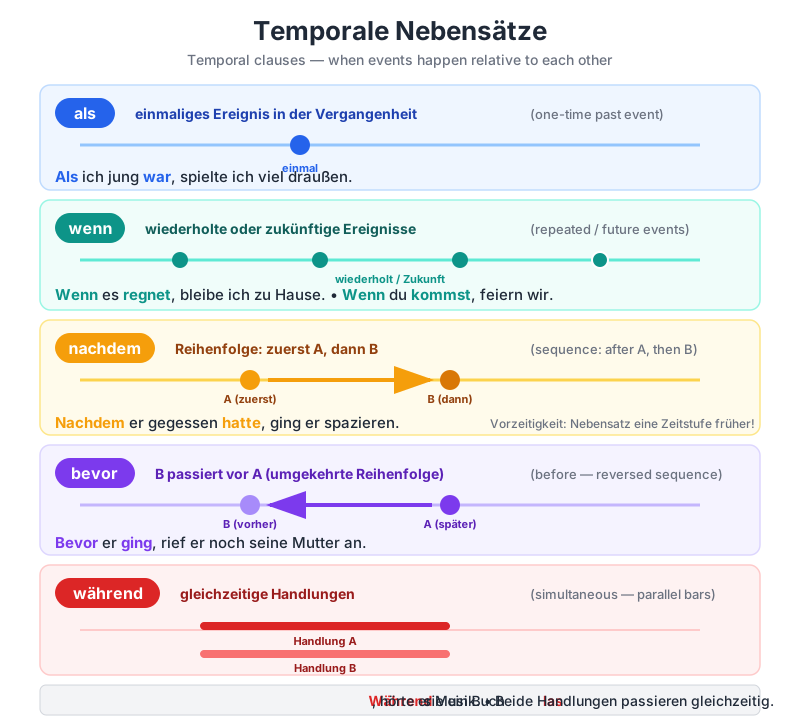
- Als for repeated events: ✗ Als ich jung war, spielte ich oft → ✓ Wenn ich jung war, spielte ich oft (repeated).
- No tense shift with nachdem: ✗ Nachdem er aß, ging er → ✓ Nachdem er gegessen hatte, ging er.
- Using als for present: Als is only for past. Present/future: wenn.
Patrones de errores comunes
Verb not in second position in main clause
Count positions: element 1 + VERB + rest. The verb is always second.
Wrong word order in subordinate clause
In subordinate clauses (weil, dass, wenn...) the verb goes to the END
Wrong connector or connector type used
Review: coordinating (und, aber, oder) vs subordinating (weil, dass, wenn) conjunctions
Als ich ein Kind war, lebten wir in Hamburg.
When I was a child, we lived in Hamburg.
Als: single past period. Both verbs Präteritum.
Nachdem er aufgestanden war, frühstückte er.
After he had gotten up, he had breakfast.
Nachdem: Plusquamperfekt → Präteritum (tense shift).
Während ich kochte, räumte er auf.
While I cooked, he tidied up.
Während: simultaneous actions, same tense.
Seitdem er hier wohnt, fühlt er sich wohl.
Since he has lived here, he feels good.
Seitdem + present tense in both clauses.
Practicar en el curso
Aplica esta gramática en los ejercicios del curso B2