PreposicionesA1
Wechselpräpositionen
Two-way prepositions: accusative vs. dative
Objetivo de aprendizaje
Can distinguish location and direction with two-way prepositions
Competencias para el examen:Comprensión lectoraExpresión escritaExpresión oral
Mira estos ejemplos. Puedes identificar el patrón gramatical?
Ich gehe in den Supermarkt.
I am going to the supermarket.
Das Buch liegt auf dem Tisch.
The book is lying on the table.
Sie hängt das Bild an die Wand.
She is hanging the picture on the wall.
Presta atención a las partes resaltadas. Qué tienen en común?
Neun Präpositionen — die Wechselpräpositionen — können sowohl Akkusativ als auch Dativ verlangen.
| Präposition | Bedeutung | Präposition | Bedeutung |
|---|---|---|---|
| in | in, into | vor | in front of |
| an | at, on (vertical) | hinter | behind |
| auf | on (horizontal) | neben | next to |
| über | over, above | zwischen | between |
| unter | under |
Regel: Wohin? (Bewegung/Richtung) → Akkusativ: Ich gehe in den Park. Wo? (Ort/Position) → Dativ: Ich bin im (= in dem) Park.
Kurzformen: in dem = im, in das = ins, an dem = am, an das = ans.
Aplica esta gramática en los ejercicios del curso A1
Ejercicios de práctica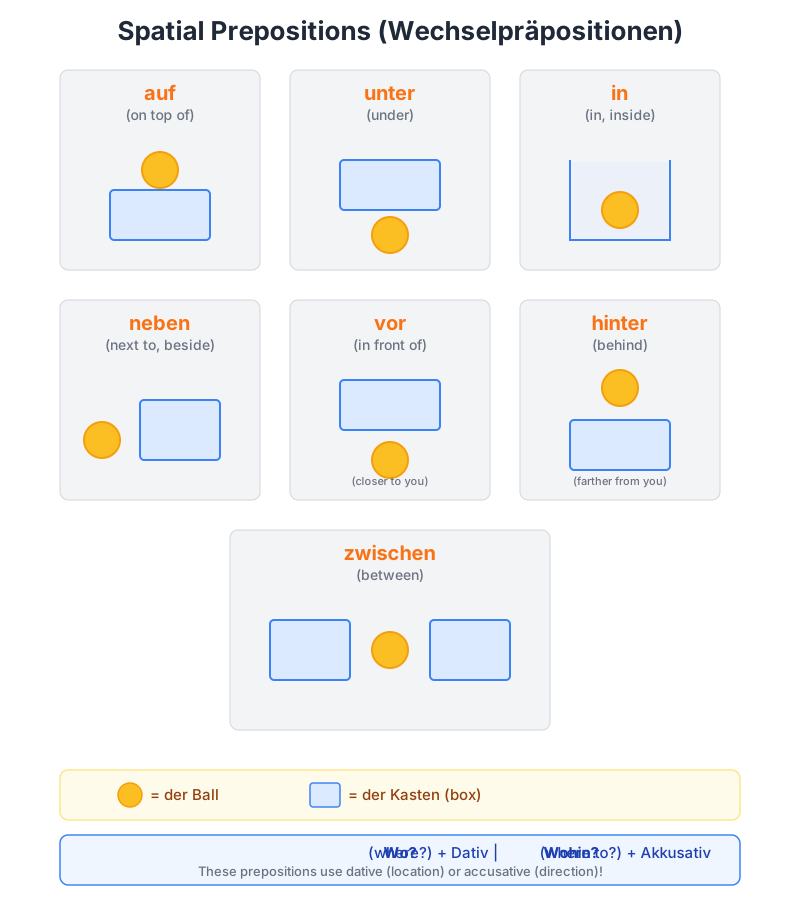
Learners mix up the cases: Ich bin in den Park (wrong — location needs dative: im Park).
🇬🇧 English speakers: English speakers have no movement-vs-location distinction for prepositions, making the accusative/dative choice completely unfamiliar.
Patrones de errores comunes
Incorrect number word form or usage
Review number patterns and exceptions (eins as standalone vs ein before nouns)
Wrong time expression format
Review formal (14:30 Uhr) vs informal (halb drei) time expressions
Incorrect spelling based on pronunciation rules
Review German spelling conventions: ie=[iː], ei=[aɪ], ß after long vowels, ss after short vowels
Ich gehe in den Supermarkt.
I am going to the supermarket.
Movement (wohin?) → accusative: in den (masculine).
Das Buch liegt auf dem Tisch.
The book is lying on the table.
Location (wo?) → dative: auf dem (masculine).
Sie hängt das Bild an die Wand.
She is hanging the picture on the wall.
Movement (wohin?) → accusative: an die (feminine).
Practicar en el curso
Aplica esta gramática en los ejercicios del curso A1