PreposicionesA2
Akkusativpräpositionen
Prepositions that always require the accusative case
Objetivo de aprendizaje
Can use accusative prepositions für, durch, gegen, ohne
Competencias para el examen:Comprensión lectoraExpresión escritaExpresión oral
Mira estos ejemplos. Puedes identificar el patrón gramatical?
Wir gehen durch den Park.
We walk through the park.
Das Geschenk ist für meinen Vater.
The gift is for my father.
Sie kommt ohne ihren Mann.
She comes without her husband.
Er läuft gegen den Wind.
He runs against the wind.
Presta atención a las partes resaltadas. Qué tienen en común?
Certain prepositions always require accusative. Mnemonic DOGFU: durch, ohne, gegen, für, um.
| Präposition | Bedeutung | Beispiel |
|---|---|---|
| durch | through | durch den Park |
| ohne | without | ohne einen Fehler |
| gegen | against, around (time) | gegen den Wind |
| für | for | für meine Mutter |
| um | around, at (time) | um den Tisch |
Um has two uses: spatial (around) with accusative, and temporal (at a time) without article: um 8 Uhr. Ohne usually appears without an article: ohne Auto.
Aplica esta gramática en los ejercicios del curso A2
Ejercicios de práctica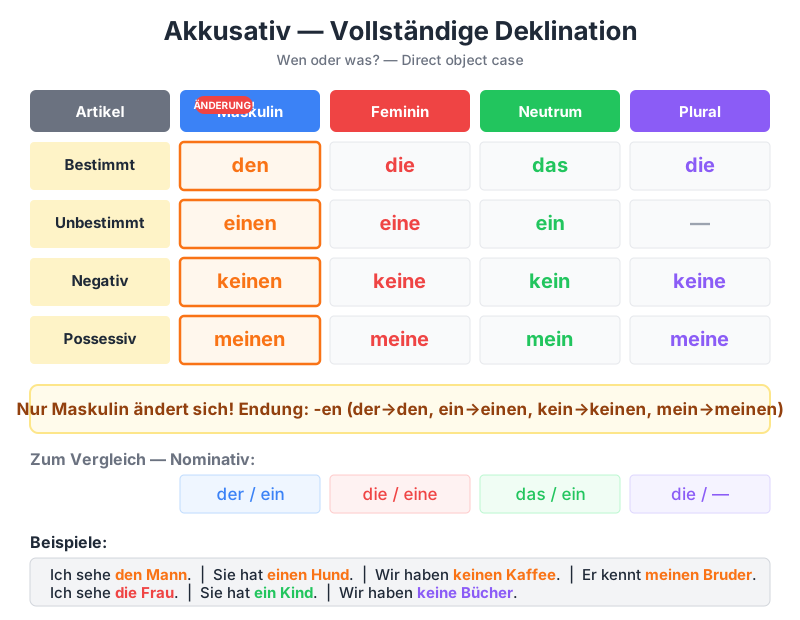
- Dative after für: ✗ für dem Kind → ✓ für das Kind.
- Articles after ohne: ohne Grund is more natural.
- Confusing um: um 8 Uhr (no article) vs. um den Tisch (accusative).
Patrones de errores comunes
Incorrect number word form or usage
Review number patterns and exceptions (eins as standalone vs ein before nouns)
Wrong time expression format
Review formal (14:30 Uhr) vs informal (halb drei) time expressions
Incorrect spelling based on pronunciation rules
Review German spelling conventions: ie=[iː], ei=[aɪ], ß after long vowels, ss after short vowels
Wir gehen durch den Park.
We walk through the park.
Durch + acc: der Park → den Park.
Das Geschenk ist für meinen Vater.
The gift is for my father.
Für + acc: mein Vater → meinen Vater.
Sie kommt ohne ihren Mann.
She comes without her husband.
Ohne + acc: ihr Mann → ihren Mann.
Er läuft gegen den Wind.
He runs against the wind.
Gegen + acc: der Wind → den Wind.
Practicar en el curso
Aplica esta gramática en los ejercicios del curso A2