Cấu trúc câuA1
Modalverb-Satzrahmen
Modal verb at position 2, infinitive at the end
Mục tiêu học tập
Can build sentences with modal verb and final infinitive
Kỹ năng thi cử:ĐọcViết
Hãy xem các ví dụ sau. Bạn có nhận ra quy tắc ngữ pháp không?
Ich muss morgen früh aufstehen.
I have to get up early tomorrow.
Du darfst hier nicht rauchen.
You are not allowed to smoke here.
Wir wollen am Samstag ins Kino gehen.
We want to go to the cinema on Saturday.
Chú ý các phần được đánh dấu. Chúng có điểm gì chung?
Modalverben bilden eine Satzklammer: Das Modalverb steht an Position 2, der Infinitiv am Satzende.
| Position 1 | Position 2 (Modal) | Mittelfeld | Satzende (Infinitiv) |
|---|---|---|---|
| Ich | muss | heute viel | arbeiten. |
| Du | kannst | gut Deutsch | sprechen. |
| Wir | möchten | morgen ins Kino | gehen. |
| Er | darf | hier nicht | rauchen. |
Mittelfeld: Zwischen Modal und Infinitiv stehen alle anderen Satzglieder: Zeit, Objekte, Adverbien, Negation.
In Fragen: Modal an Position 1: Kannst du mir helfen?
Tipp: Die Satzklammer ist ein Grundprinzip des Deutschen — sie gilt auch für trennbare Verben und das Perfekt.
Áp dụng ngữ pháp này vào các bài tập khóa học A1
Bài tập thực hành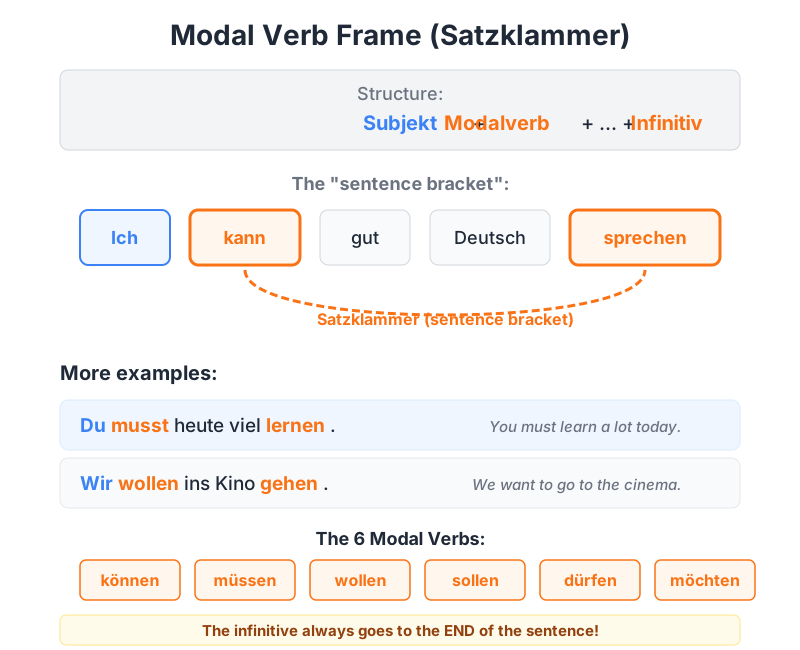
Learners put the infinitive right after the modal: Ich muss arbeiten heute instead of Ich muss heute arbeiten.
🇬🇧 English speakers: English speakers put the infinitive right after the modal (English word order): 'Ich muss arbeiten heute' instead of 'Ich muss heute arbeiten'.
Các lỗi thường gặp
Verb not in second position in main clause
Count positions: element 1 + VERB + rest. The verb is always second.
Wrong word order in subordinate clause
In subordinate clauses (weil, dass, wenn...) the verb goes to the END
Wrong connector or connector type used
Review: coordinating (und, aber, oder) vs subordinating (weil, dass, wenn) conjunctions
Ich muss morgen früh aufstehen.
I have to get up early tomorrow.
Muss at position 2, aufstehen at the end. Morgen früh goes in between.
Du darfst hier nicht rauchen.
You are not allowed to smoke here.
Darfst at position 2, nicht and hier in the middle, rauchen at the end.
Wir wollen am Samstag ins Kino gehen.
We want to go to the cinema on Saturday.
Wollen at position 2, am Samstag and ins Kino in the middle, gehen at the end.
Luyện tập trong khóa học
Áp dụng ngữ pháp này vào các bài tập khóa học A1