Danh từA1
Pluralbildung
Basic plural formation patterns in German
Mục tiêu học tập
Can form and recognize plural nouns in German
Kỹ năng thi cử:ĐọcViết
Hãy xem các ví dụ sau. Bạn có nhận ra quy tắc ngữ pháp không?
Die Kinder spielen im Park.
The children are playing in the park.
Ich habe zwei Brüder.
I have two brothers.
Die Autos sind teuer.
The cars are expensive.
Chú ý các phần được đánh dấu. Chúng có điểm gì chung?
Im Deutschen gibt es mehrere Pluralformen — anders als im Englischen gibt es kein einfaches -s für alle Nomen.
Die fünf Pluraltypen:
| Typ | Endung | Singular → Plural |
|---|---|---|
| 1 | -e | der Tisch → die Tische |
| 2 | -en/-n | die Frau → die Frauen |
| 3 | -er | das Kind → die Kinder |
| 4 | -s | das Auto → die Autos |
| 5 | — (keine) | der Lehrer → die Lehrer |
Umlaut: Viele Pluralformen bekommen zusätzlich einen Umlaut: der Bruder → die Brüder, die Mutter → die Mütter.
Wichtig: Im Plural ist der bestimmte Artikel immer die, egal welches Geschlecht: die Tische, die Kinder, die Frauen.
Áp dụng ngữ pháp này vào các bài tập khóa học A1
Bài tập thực hành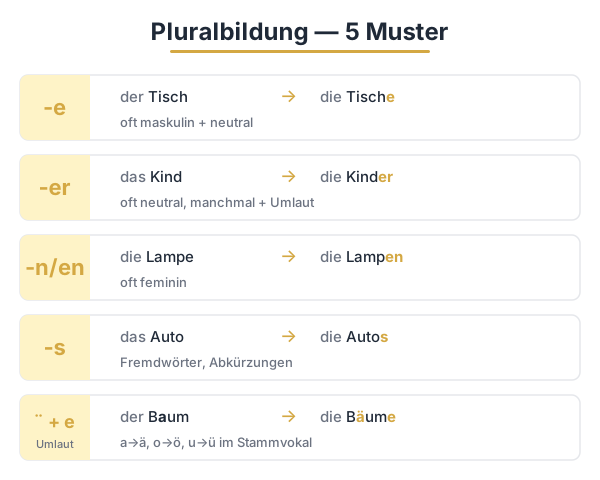
There is no single rule — learners must memorize the plural with each noun. Adding -s (as in English) rarely works.
🇬🇧 English speakers: English speakers default to adding -s for all plurals since that is the dominant English pattern, but German -s plurals are actually rare.
Các lỗi thường gặp
Wrong grammatical gender assigned to noun
Learn nouns with their articles (der/die/das) from the start
Incorrect plural ending or umlaut
Review the 5 plural patterns: -e, -er, -en, -s, and no change
Wrong case ending on noun or article
Practice case tables and identify subject/object/indirect object in sentences
Die Kinder spielen im Park.
The children are playing in the park.
Kind → Kinder: -er plural pattern, all plurals take die.
Ich habe zwei Brüder.
I have two brothers.
Bruder → Brüder: umlaut change with no ending added.
Die Autos sind teuer.
The cars are expensive.
Auto → Autos: -s plural, common for foreign words.
Luyện tập trong khóa học
Áp dụng ngữ pháp này vào các bài tập khóa học A1