Stavba větyB2
Časové věty (als/wenn/nachdem/bevor/während)
Complex temporal clauses with precise time relationships
Cíl učení
Can express precise time relationships with temporal clauses
Zkouškové dovednosti:ČteníPsaní
Podívejte se na tyto příklady. Dokážete rozpoznat gramatický vzorec?
Als ich ein Kind war, lebten wir in Hamburg.
When I was a child, we lived in Hamburg.
Nachdem er aufgestanden war, frühstückte er.
After he had gotten up, he had breakfast.
Während ich kochte, räumte er auf.
While I cooked, he tidied up.
Seitdem er hier wohnt, fühlt er sich wohl.
Since he has lived here, he feels good.
Zaměřte se na zvýrazněné části. Co mají společného?
B2 requires mastery of all temporal subordinating conjunctions with correct tense sequences.
| Konjunktion | Bedeutung | Tense Rule |
|---|---|---|
| als | when (single past event) | Präteritum/Perfekt |
| wenn | when(ever), if | Present or repeated past |
| nachdem | after | Tense shift required |
| bevor/ehe | before | Same tense both clauses |
| während | while | Same tense both clauses |
| bis | until | Same tense both clauses |
| seitdem | since (point in time) | Present tense in both |
Als vs. wenn: als = one specific past event; wenn = repeated events (past or present) or conditions. Als ich Kind war... vs. Wenn ich nach Hause komme...
Nachdem tense shift: nachdem-clause one tense earlier: Nachdem er gegessen hatte (Plusquamperfekt), ging er (Präteritum).
Použijte tuto gramatiku ve cvičeních kurzu B2
Procvičovací cvičení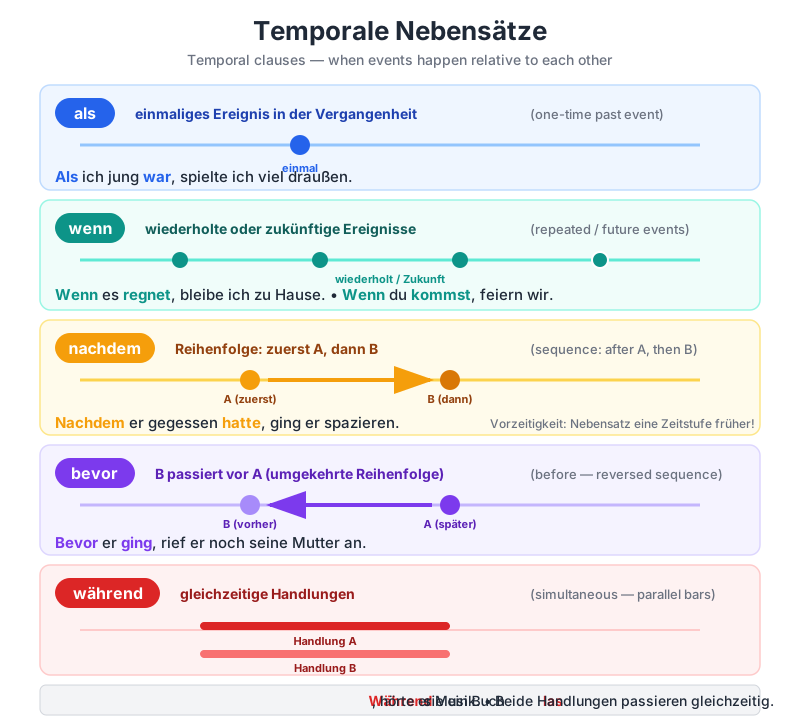
- Als for repeated events: ✗ Als ich jung war, spielte ich oft → ✓ Wenn ich jung war, spielte ich oft (repeated).
- No tense shift with nachdem: ✗ Nachdem er aß, ging er → ✓ Nachdem er gegessen hatte, ging er.
- Using als for present: Als is only for past. Present/future: wenn.
Časté chyby
Verb not in second position in main clause
Count positions: element 1 + VERB + rest. The verb is always second.
Wrong word order in subordinate clause
In subordinate clauses (weil, dass, wenn...) the verb goes to the END
Wrong connector or connector type used
Review: coordinating (und, aber, oder) vs subordinating (weil, dass, wenn) conjunctions
Als ich ein Kind war, lebten wir in Hamburg.
When I was a child, we lived in Hamburg.
Als: single past period. Both verbs Präteritum.
Nachdem er aufgestanden war, frühstückte er.
After he had gotten up, he had breakfast.
Nachdem: Plusquamperfekt → Präteritum (tense shift).
Während ich kochte, räumte er auf.
While I cooked, he tidied up.
Während: simultaneous actions, same tense.
Seitdem er hier wohnt, fühlt er sich wohl.
Since he has lived here, he feels good.
Seitdem + present tense in both clauses.
Procvičit v kurzu
Použijte tuto gramatiku ve cvičeních kurzu B2