SatzbauB2
Temporalsätze (als/wenn/nachdem/bevor/während)
Complex temporal clauses with precise time relationships
Lernziel
Can express precise time relationships with temporal clauses
Prüfungskompetenzen:LesenSchreiben
Schau dir diese Beispiele an. Kannst du das grammatische Muster erkennen?
Als ich ein Kind war, lebten wir in Hamburg.
When I was a child, we lived in Hamburg.
Nachdem er aufgestanden war, frühstückte er.
After he had gotten up, he had breakfast.
Während ich kochte, räumte er auf.
While I cooked, he tidied up.
Seitdem er hier wohnt, fühlt er sich wohl.
Since he has lived here, he feels good.
Achte auf die hervorgehobenen Teile. Was haben sie gemeinsam?
B2 requires mastery of all temporal subordinating conjunctions with correct tense sequences.
| Konjunktion | Bedeutung | Tense Rule |
|---|---|---|
| als | when (single past event) | Präteritum/Perfekt |
| wenn | when(ever), if | Present or repeated past |
| nachdem | after | Tense shift required |
| bevor/ehe | before | Same tense both clauses |
| während | while | Same tense both clauses |
| bis | until | Same tense both clauses |
| seitdem | since (point in time) | Present tense in both |
Als vs. wenn: als = one specific past event; wenn = repeated events (past or present) or conditions. Als ich Kind war... vs. Wenn ich nach Hause komme...
Nachdem tense shift: nachdem-clause one tense earlier: Nachdem er gegessen hatte (Plusquamperfekt), ging er (Präteritum).
Wende diese Grammatik in den Übungen des Kurses B2 an
Übungsaufgaben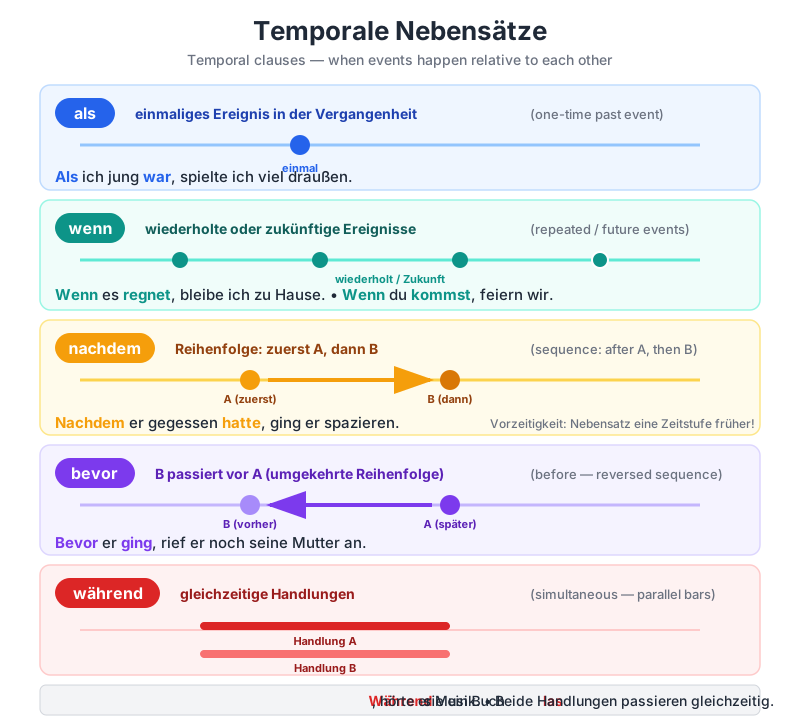
- Als for repeated events: ✗ Als ich jung war, spielte ich oft → ✓ Wenn ich jung war, spielte ich oft (repeated).
- No tense shift with nachdem: ✗ Nachdem er aß, ging er → ✓ Nachdem er gegessen hatte, ging er.
- Using als for present: Als is only for past. Present/future: wenn.
Häufige Fehlermuster
Verb not in second position in main clause
Count positions: element 1 + VERB + rest. The verb is always second.
Wrong word order in subordinate clause
In subordinate clauses (weil, dass, wenn...) the verb goes to the END
Wrong connector or connector type used
Review: coordinating (und, aber, oder) vs subordinating (weil, dass, wenn) conjunctions
Als ich ein Kind war, lebten wir in Hamburg.
When I was a child, we lived in Hamburg.
Als: single past period. Both verbs Präteritum.
Nachdem er aufgestanden war, frühstückte er.
After he had gotten up, he had breakfast.
Nachdem: Plusquamperfekt → Präteritum (tense shift).
Während ich kochte, räumte er auf.
While I cooked, he tidied up.
Während: simultaneous actions, same tense.
Seitdem er hier wohnt, fühlt er sich wohl.
Since he has lived here, he feels good.
Seitdem + present tense in both clauses.
Im Kurs üben
Wende diese Grammatik in den Übungen des Kurses B2 an