Sentence StructureA2
Druhá pozice příklonek
The second-position rule: clitics (jsem, bych, se, si, mi, ho) cluster after the first phrase in a fixed order
Learning Goal
I can place auxiliary and pronoun clitics in second position in the correct internal order.
Exam Skills:CCE-A2 mluveníCCE-A2 psaní
Look at these examples. Can you spot the grammar pattern?
Včera jsem se mu to snažil vysvětlit.
Yesterday I tried to explain it to him.
Líbí se mi ta písnička od Jarka Nohavici.
I like that song by Jarek Nohavica.
Půjčil bys mi ho do pondělí?
Would you lend it to me until Monday?
Pay attention to the highlighted parts. What do they have in common?
Krátká nepřízvučná slova — příklonky — stojí vždy na druhé pozici ve větě, v pevném pořadí:
| 1. pozice | ① pomocné sloveso | ② se/si | ③ 3. pád | ④ 4. pád | zbytek |
|---|---|---|---|---|---|
| Včera | jsem | se | mu | to | snažil vysvětlit. |
| Proč | by | ses | zlobil? |
Pořadí uvnitř skupiny: jsem/bych → se/si → mi/ti/mu → ho/to. První pozici může tvořit cokoli (podmět, příslovce, spojka kromě a/i), ale příklonky se vždy seřadí hned za ní.
Apply this grammar in A2 course exercises
Practice Exercises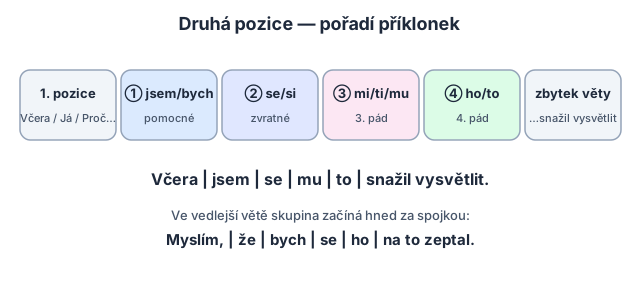
- Clitic first: *Se mi to líbí → Líbí se mi to
- Wrong internal order: *Včera se jsem umyl → Včera jsem se umyl
- Accusative before dative: *Dal ho mi → Dal mi ho
Common Error Patterns
Clitic at the start of the clause
Move it: the cluster lives after the first phrase
Wrong order inside the cluster
jsem/bych → se/si → dative → accusative
Včera jsem se mu to snažil vysvětlit.
Yesterday I tried to explain it to him.
The full cluster: jsem → se → mu → to, right after Včera.
Líbí se mi ta písnička od Jarka Nohavici.
I like that song by Jarek Nohavica.
Verb first, then se mi — the clitics cannot open the sentence.
Půjčil bys mi ho do pondělí?
Would you lend it to me until Monday?
bys → mi → ho: conditional auxiliary, dative, accusative.
Practice in course
Apply this grammar in A2 course exercises
Frequently asked questions
- When is Druhá pozice příklonek used?
- Krátká nepřízvučná slova — příklonky — stojí vždy na druhé pozici ve větě, v pevném pořadí:
- How is Druhá pozice příklonek formed?
- Pořadí uvnitř skupiny: jsem/bych → se/si → mi/ti/mu → ho/to . První pozici může tvořit cokoli (podmět, příslovce, spojka kromě a/i), ale příklonky se vždy seřadí hned za ní.
- What are common mistakes with Druhá pozice příklonek?
- Clitic first: *Se mi to líbí → Líbí se mi to Wrong internal order: *Včera se jsem umyl → Včera jsem se umyl Accusative before dative: *Dal ho mi → Dal mi ho