VerbsB2
Konjunktiv II (vollständig)
Complete Konjunktiv II system including past and complex conditions
Learning Goal
Can express complex unreal conditions in past and present
Exam Skills:ReadingWritingSpeaking
Look at these examples. Can you spot the grammar pattern?
Wenn ich das gewusst hätte, wäre ich nicht gekommen.
If I had known that, I wouldn't have come.
Er hätte mir helfen können.
He could have helped me.
An seiner Stelle gäbe ich nicht auf.
In his place, I wouldn't give up.
Wenn ich früher aufgestanden wäre, hätte ich den Zug erreicht.
If I had gotten up earlier, I would have caught the train.
Pay attention to the highlighted parts. What do they have in common?
At B1 you learned würde + Infinitiv and basic forms. Now: past Konjunktiv II and complex conditions.
Past Konjunktiv II: hätte/wäre + Partizip II.
| Present unreal | Past unreal |
|---|---|
| Wenn ich Zeit hätte... | Wenn ich Zeit gehabt hätte... |
| Wenn er hier wäre... | Wenn er hier gewesen wäre... |
| ...würde ich kommen. | ...wäre ich gekommen. |
Mixed conditions: Past condition + present result: Wenn ich besser gelernt hätte, wäre ich jetzt Arzt.
Common strong verb forms (used instead of würde): gäbe, käme, wüsste, gänge, brächte, fände, ließe.
Apply this grammar in B2 course exercises
Practice Exercises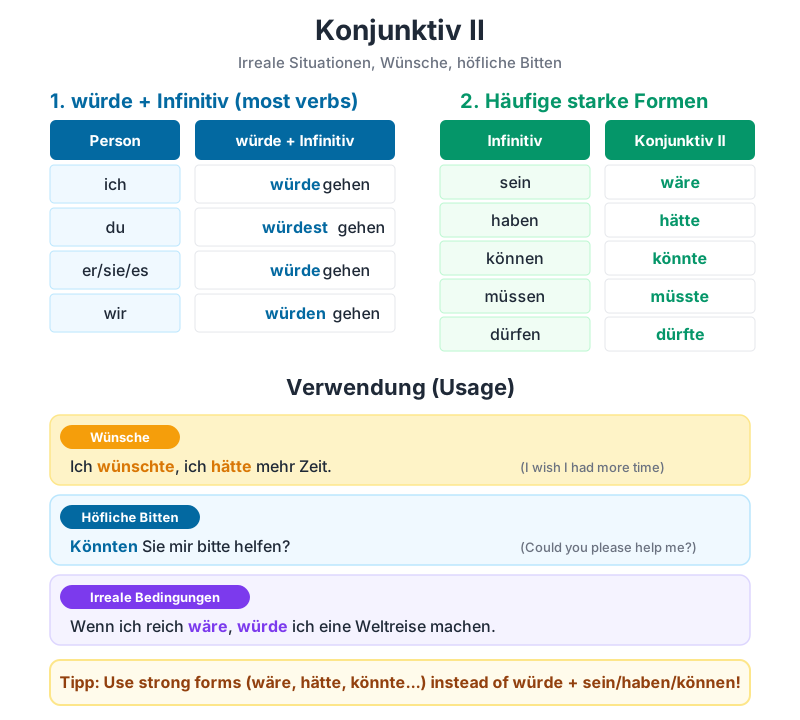
- Using würde for past: ✗ würde gekommen sein → ✓ wäre gekommen.
- Wrong auxiliary in past: Use wäre for movement/sein verbs: wäre gegangen.
- Overusing würde at B2: Use strong forms: gäbe instead of würde geben.
Common Error Patterns
Incorrect verb ending for the subject
Review verb conjugation tables and practice matching endings to pronouns
Forgot stem vowel change in irregular verbs
Practice stem-changing verbs (e→i, e→ie, a→ä) with flashcards
Verb placed in wrong position
Remember: V2 in main clauses, verb-final in subordinate clauses
Wenn ich das gewusst hätte, wäre ich nicht gekommen.
If I had known that, I wouldn't have come.
Past Konj. II: hätte gewusst + wäre gekommen.
Er hätte mir helfen können.
He could have helped me.
Hätte + Infinitiv + Modalverb (double infinitive).
An seiner Stelle gäbe ich nicht auf.
In his place, I wouldn't give up.
Gäbe = strong Konj. II of geben (instead of würde geben).
Wenn ich früher aufgestanden wäre, hätte ich den Zug erreicht.
If I had gotten up earlier, I would have caught the train.
Past condition (wäre aufgestanden) + past result (hätte erreicht).
Practice in course
Apply this grammar in B2 course exercises
Frequently asked questions
- When is Konjunktiv II (vollständig) used?
- At B1 you learned würde + Infinitiv and basic forms. Now: past Konjunktiv II and complex conditions.
- How is Konjunktiv II (vollständig) formed?
- Mixed conditions: Past condition + present result: Wenn ich besser gelernt hätte , wäre ich jetzt Arzt . Common strong verb forms (used instead of würde): gäbe, käme, wüsste, gänge, brächte, fände, ließe .
- What are common mistakes with Konjunktiv II (vollständig)?
- Using würde for past: ✗ würde gekommen sein → ✓ wäre gekommen . Wrong auxiliary in past: Use wäre for movement/sein verbs: wäre gegangen . Overusing würde at B2: Use strong forms: gäbe instead of würde geben .