VerbosA1
Modalverb 'dürfen'
dürfen for permission and prohibition
Objetivo de aprendizaje
Can express permission and prohibition with dürfen
Competencias para el examen:Expresión escritaExpresión oral
Mira estos ejemplos. Puedes identificar el patrón gramatical?
Darf ich hier sitzen?
May I sit here?
Du darfst hier nicht parken.
You must not park here.
Kinder dürfen nicht allein schwimmen.
Children are not allowed to swim alone.
Presta atención a las partes resaltadas. Qué tienen en común?
Dürfen drückt Erlaubnis oder Verbot aus (may, be allowed to).
| Person | Form | Person | Form |
|---|---|---|---|
| ich | darf | wir | dürfen |
| du | darfst | ihr | dürft |
| er/sie/es | darf | sie/Sie | dürfen |
Erlaubnis fragen: Darf ich hier sitzen? Darf ich etwas fragen?
Verbot (nicht dürfen = must not): Du darfst hier nicht rauchen. Man darf hier nicht fotografieren.
Nicht dürfen vs. nicht müssen: Nicht dürfen = verboten (must not). Nicht müssen = nicht nötig (don't have to). Diesen Unterschied unbedingt beachten!
Aplica esta gramática en los ejercicios del curso A1
Ejercicios de práctica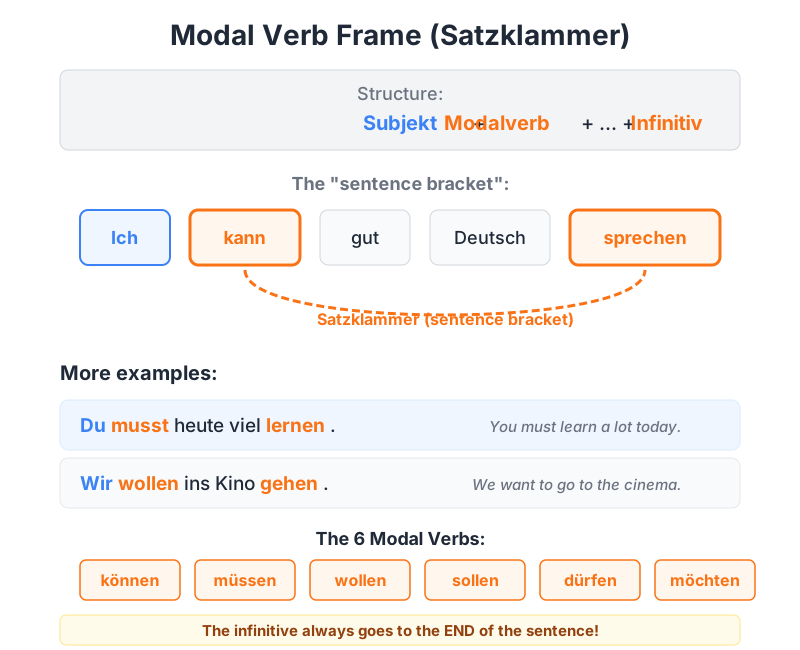
Learners confuse nicht müssen (don't have to) with nicht dürfen (must not). Du musst nicht = you don't need to. Du darfst nicht = you are forbidden.
🇬🇧 English speakers: English speakers confuse 'must not' (darf nicht) with 'don't have to' (muss nicht), since English 'must not' maps to dürfen, not müssen.
Patrones de errores comunes
Incorrect verb ending for the subject
Review verb conjugation tables and practice matching endings to pronouns
Forgot stem vowel change in irregular verbs
Practice stem-changing verbs (e→i, e→ie, a→ä) with flashcards
Verb placed in wrong position
Remember: V2 in main clauses, verb-final in subordinate clauses
Darf ich hier sitzen?
May I sit here?
Darf ich + infinitive for polite permission requests.
Du darfst hier nicht parken.
You must not park here.
Nicht dürfen = prohibition, not just 'don't have to'.
Kinder dürfen nicht allein schwimmen.
Children are not allowed to swim alone.
Nicht dürfen for rules: dürfen + nicht + infinitive.
Practicar en el curso
Aplica esta gramática en los ejercicios del curso A1