ПадежиA2
Винительный падеж (полностью)
Винительный падеж целиком: все типы артиклей и личные местоимения
Цель обучения
Я умею ставить в винительный падеж артикли всех типов и личные местоимения.
Экзаменационные навыки:ЧтениеПисьмоГоворение
Посмотрите на эти примеры. Можете ли вы заметить грамматическую закономерность?
Ich kenne einen guten Arzt.
I know a good doctor.
Kannst du mich morgen anrufen?
Can you call me tomorrow?
Er besucht seinen Bruder jedes Wochenende.
He visits his brother every weekend.
Siehst du die Frau dort?
Do you see the woman there?
Обратите внимание на выделенные части. Что у них общего?
Винительный падеж (Akkusativ) в немецком занят тем же, чем и в русском: отвечает на вопрос «кого? что?» и оформляет прямое дополнение. Разница в том, где стоит метка падежа. Русский меняет само существительное (брат → вижу брата, книга → вижу книгу), немецкий оставляет существительное в покое и меняет артикль. На A1 вы видели только den; вот полная картина.
| м.р. | ж.р. | ср.р. | мн.ч. | |
|---|---|---|---|---|
| определённый | den | die | das | die |
| неопределённый | einen | eine | ein | — |
| отрицание | keinen | keine | kein | keine |
| притяжательный | meinen | meine | mein | meine |
Присмотритесь: меняется только мужской род единственного числа. Здесь немецкий устроен зеркально русскому: у нас в винительном меняется как раз женский род (книга → книгу), а мужской неодушевлённый совпадает с именительным. Поэтому die Frau и das Buch после глагола выглядят точно так же, как перед ним.
Личные местоимения: ich → mich (меня), du → dich (тебя), er → ihn (его), sie → sie (её), es → es, wir → uns (нас), ihr → euch (вас), sie/Sie → sie/Sie (их / Вас).
Глаголы, которые в немецком требуют Akkusativ, а в русском - другого падежа. Именно на них русскоязычные ошибаются чаще всего: anrufen (звонить кому - но ich rufe dich an), brauchen (нуждаться в чём - но ich brauche das Auto), stören (мешать кому - но Störe ich dich?). Остальные частые: sehen, hören, kennen, besuchen, lieben, finden, verstehen.
Закрепите эту грамматику в упражнениях курса A2
Упражнения для практики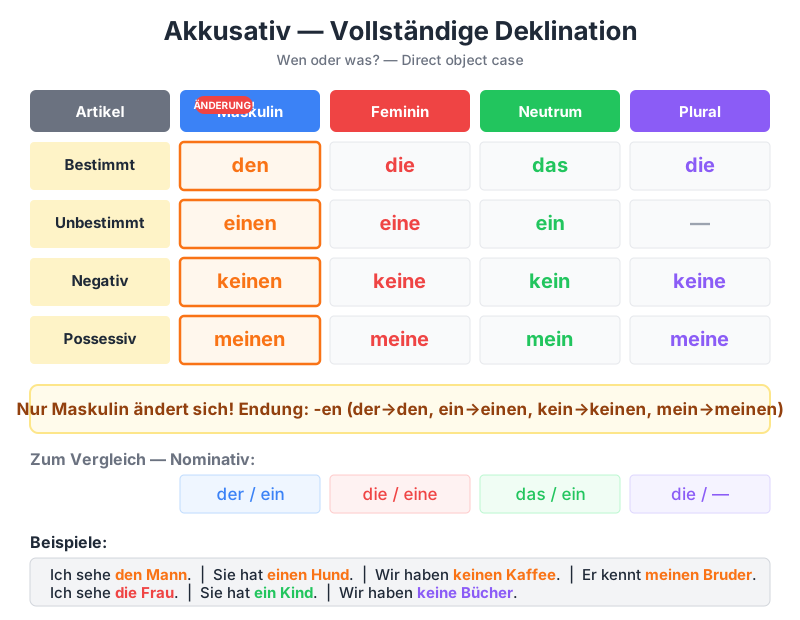
- Дательный, как в «позвонить тебе»: «позвонить тебе» подсказывает ✗ Ich rufe dir an → ✓ Ich rufe dich an. То же с brauchen и stören.
- Изменение женского и среднего рода: ✗ Ich kaufe den Buch → ✓ Ich kaufe das Buch. Меняется только мужской род.
- Местоимение осталось в именительном: ✗ Ich sehe er → ✓ Ich sehe ihn.
- Притяжательное без -en: ✗ Er besucht sein Bruder → ✓ Er besucht seinen Bruder.
Частые ошибки
Incorrect number word form or usage
Review number patterns and exceptions (eins as standalone vs ein before nouns)
Wrong time expression format
Review formal (14:30 Uhr) vs informal (halb drei) time expressions
Incorrect spelling based on pronunciation rules
Review German spelling conventions: ie=[iː], ei=[aɪ], ß after long vowels, ss after short vowels
Ich kenne einen guten Arzt.
I know a good doctor.
Masculine accusative: ein→einen. Adjective also gets -en.
Kannst du mich morgen anrufen?
Can you call me tomorrow?
Accusative pronoun: ich→mich.
Er besucht seinen Bruder jedes Wochenende.
He visits his brother every weekend.
Possessive accusative masculine: sein→seinen.
Siehst du die Frau dort?
Do you see the woman there?
Feminine accusative: die stays die.
Wir brauchen das Auto nicht.
We don't need the car.
Neuter accusative: das stays das.
Практика в курсе
Закрепите эту грамматику в упражнениях курса A2
Часто задаваемые вопросы
- Когда используется Винительный падеж (полностью)?
- Винительный падеж (Akkusativ) в немецком занят тем же, чем и в русском: отвечает на вопрос «кого? что?» и оформляет прямое дополнение. Разница в том, где стоит метка падежа. Русский меняет само существительное (брат → вижу брата, книга → вижу книгу), немецкий оставляет существительное в покое и меняет артикль . На A1 вы видели только den ; вот полная картина.
- Как образуется Винительный падеж (полностью)?
- Присмотритесь: меняется только мужской род единственного числа . Здесь немецкий устроен зеркально русскому: у нас в винительном меняется как раз женский род (книга → книгу), а мужской неодушевлённый совпадает с именительным. Поэтому die Frau и das Buch после глагола выглядят точно так же, как перед ним. Личные местоимения: ich → mich (меня), du → dich (тебя), er → ihn (его), sie → sie (её), es → es, wir → uns (нас), ihr → euch (вас), sie/Sie → sie/Sie (их / Вас). Глаголы, которые в немецком требуют Akkusativ, а в русском - другого падежа.
- Какие типичные ошибки с Винительный падеж (полностью)?
- Дательный, как в «позвонить тебе»: «позвонить тебе» подсказывает ✗ Ich rufe dir an → ✓ Ich rufe dich an . То же с brauchen и stören . Изменение женского и среднего рода: ✗ Ich kaufe den Buch → ✓ Ich kaufe das Buch . Меняется только мужской род. Местоимение осталось в именительном: ✗ Ich sehe er → ✓ Ich sehe ihn . Притяжательное без -en: ✗ Er besucht sein Bruder → ✓ Er besucht seinen Bruder .