Động từB2
Partizipialkonstruktionen
Partizip I and II used as adjectives before nouns
Mục tiêu học tập
Can understand and use extended participial attributes
Kỹ năng thi cử:ĐọcViết
Hãy xem các ví dụ sau. Bạn có nhận ra quy tắc ngữ pháp không?
Die weinende Frau saß auf der Bank.
The crying woman sat on the bench.
Das reparierte Auto fährt wieder.
The repaired car drives again.
Die seit Monaten geplante Reise beginnt morgen.
The trip planned for months begins tomorrow.
Der neben mir sitzende Mann liest Zeitung.
The man sitting next to me reads the newspaper.
Chú ý các phần được đánh dấu. Chúng có điểm gì chung?
German uses participles as adjective-like modifiers before nouns, replacing relative clauses in formal/written style.
| Type | Formation | Meaning | Example |
|---|---|---|---|
| Partizip I | Infinitiv + -d | ongoing action | der schlafende Mann |
| Partizip II | ge- + stem + -t/-en | completed action (passive) | das geöffnete Fenster |
Partizip I = relative clause with active meaning: der schlafende Mann = der Mann, der schläft.
Partizip II = relative clause with passive meaning: das geöffnete Fenster = das Fenster, das geöffnet wurde.
Both take normal adjective declension endings. Extended forms are common in academic German: die seit Jahren diskutierte Frage (the question discussed for years).
Áp dụng ngữ pháp này vào các bài tập khóa học B2
Bài tập thực hành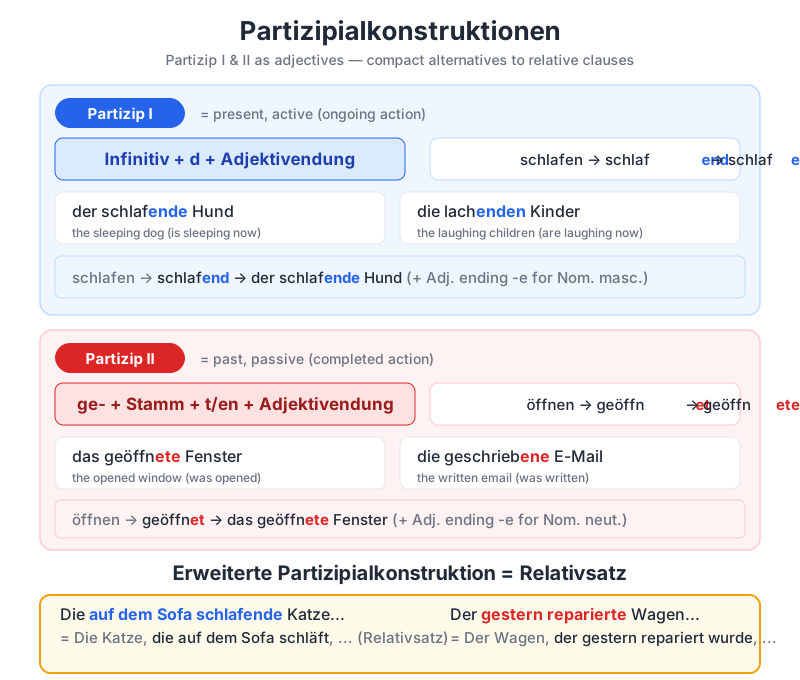
- Missing adjective ending: ✗ der schlafend Mann → ✓ der schlafende Mann.
- Active/passive confusion: Partizip I = active (doing); Partizip II = passive (done to).
- Overuse in speech: Extended participial phrases sound very written. In speech, use relative clauses.
Các lỗi thường gặp
Incorrect verb ending for the subject
Review verb conjugation tables and practice matching endings to pronouns
Forgot stem vowel change in irregular verbs
Practice stem-changing verbs (e→i, e→ie, a→ä) with flashcards
Verb placed in wrong position
Remember: V2 in main clauses, verb-final in subordinate clauses
Die weinende Frau saß auf der Bank.
The crying woman sat on the bench.
Partizip I: weinen + -d + -e = weinende.
Das reparierte Auto fährt wieder.
The repaired car drives again.
Partizip II: repariert + -e = reparierte.
Die seit Monaten geplante Reise beginnt morgen.
The trip planned for months begins tomorrow.
Extended Partizip II construction.
Der neben mir sitzende Mann liest Zeitung.
The man sitting next to me reads the newspaper.
Extended Partizip I with prepositional phrase.
Luyện tập trong khóa học
Áp dụng ngữ pháp này vào các bài tập khóa học B2