Đại từA1
Personalpronomen
Personal pronouns in nominative case
Mục tiêu học tập
Can use personal pronouns to refer to people
Kỹ năng thi cử:ViếtNói
Hãy xem các ví dụ sau. Bạn có nhận ra quy tắc ngữ pháp không?
Ich komme aus Deutschland.
I come from Germany.
Du bist sehr nett.
You are very nice.
Woher kommen Sie?
Where do you come from? (formal)
Chú ý các phần được đánh dấu. Chúng có điểm gì chung?
Die Personalpronomen im Nominativ ersetzen Nomen als Subjekt im Satz. Sie zeigen Person und Zahl an.
Übersicht:
| Person | Singular | Plural |
|---|---|---|
| 1. Person | ich | wir |
| 2. Person (informell) | du | ihr |
| 3. Person | er / sie / es | sie |
| 2. Person (formell) | Sie | |
Verwendung: Du verwendet man für Freunde, Familie und Kinder. Ihr ist der Plural von du. Sie (immer groß!) ist die höfliche Form für eine oder mehrere Personen.
3. Person: Er ersetzt maskuline Nomen (der Tisch → er), sie ersetzt feminine (die Lampe → sie), es ersetzt neutrale (das Buch → es). Achtung: sie (klein) = she/they, Sie (groß) = you (formal).
Áp dụng ngữ pháp này vào các bài tập khóa học A1
Bài tập thực hành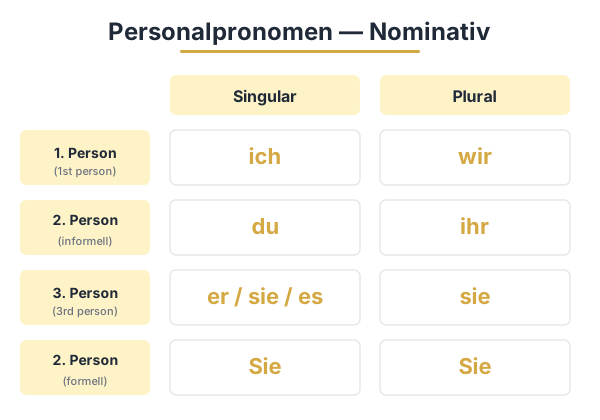
Beginners confuse sie (she), sie (they), and Sie (you-formal). Context and verb conjugation help distinguish them.
🇬🇧 English speakers: English speakers forget that 'you' has three forms (du/ihr/Sie) and default to a single form for all registers.
Các lỗi thường gặp
Used wrong case form of pronoun
Review pronoun declension tables (nom/akk/dat)
Pronoun gender doesn't match the noun it replaces
Check the grammatical gender of the noun before choosing er/sie/es
Mixed up du/Sie or ihr/Sie forms
Review formal vs informal address rules
Ich komme aus Deutschland.
I come from Germany.
Ich (I) is always lowercase unless it starts a sentence.
Du bist sehr nett.
You are very nice.
Du is the informal 'you' for friends, family, and children.
Woher kommen Sie?
Where do you come from? (formal)
Sie (formal you) is always capitalized and uses the third-person plural verb form.
Luyện tập trong khóa học
Áp dụng ngữ pháp này vào các bài tập khóa học A1