Đại từA2
Personalpronomen im Akkusativ
Personal pronouns as direct objects in the accusative case
Mục tiêu học tập
Can replace direct objects with accusative pronouns
Kỹ năng thi cử:ViếtNói
Hãy xem các ví dụ sau. Bạn có nhận ra quy tắc ngữ pháp không?
Verstehst du mich?
Do you understand me?
Ich liebe dich.
I love you.
Wir kennen ihn seit drei Jahren.
We have known him for three years.
Der Lehrer fragt uns jeden Tag.
The teacher asks us every day.
Chú ý các phần được đánh dấu. Chúng có điểm gì chung?
When a personal pronoun is the direct object, it changes form — like English I→me, he→him.
| Nominativ | Akkusativ | Beispiel |
|---|---|---|
| ich | mich | Er sieht mich. |
| du | dich | Ich rufe dich an. |
| er | ihn | Kennst du ihn? |
| sie | sie | Ich besuche sie. |
| es | es | Ich finde es gut. |
| wir | uns | Er kennt uns. |
| ihr | euch | Ich frage euch. |
| sie/Sie | sie/Sie | Ich verstehe Sie. |
Only ich, du, er, wir, ihr have distinct accusative forms. Pronoun objects come right after the verb.
Áp dụng ngữ pháp này vào các bài tập khóa học A2
Bài tập thực hành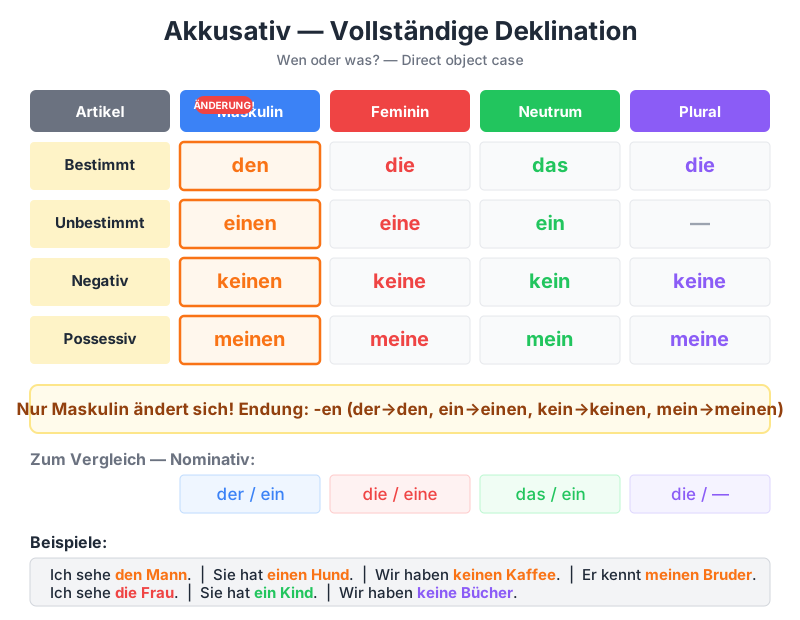
- Nominative instead of accusative: ✗ Ich sehe er → ✓ Ich sehe ihn.
- Confusing mich/mir: mich = accusative, mir = dative.
- Wrong position: ✗ Ich jeden Tag sehe ihn → ✓ Ich sehe ihn jeden Tag.
Các lỗi thường gặp
Used wrong case form of pronoun
Review pronoun declension tables (nom/akk/dat)
Pronoun gender doesn't match the noun it replaces
Check the grammatical gender of the noun before choosing er/sie/es
Mixed up du/Sie or ihr/Sie forms
Review formal vs informal address rules
Verstehst du mich?
Do you understand me?
Ich→mich as direct object.
Ich liebe dich.
I love you.
Du→dich.
Wir kennen ihn seit drei Jahren.
We have known him for three years.
Er→ihn.
Der Lehrer fragt uns jeden Tag.
The teacher asks us every day.
Wir→uns.
Luyện tập trong khóa học
Áp dụng ngữ pháp này vào các bài tập khóa học A2