VerbsA2
Budoucí čas dokonavých sloves
Perfective present forms express the future (udělám, koupím, napíšu); budu + infinitive is only for imperfectives
Learning Goal
I can form the future correctly for both aspects: budu + infinitive for imperfectives, present forms for perfectives.
Exam Skills:CCE-A2 mluveníCCE-A2 psaní
Look at these examples. Can you spot the grammar pattern?
Zítra koupím lístky na vlak do Olomouce.
Tomorrow I will buy train tickets to Olomouc.
O víkendu budu číst a v neděli večer ti zavolám.
At the weekend I will be reading, and on Sunday evening I will call you.
Až přijedeš do Prahy, ukážu ti Vyšehrad.
When you come to Prague, I will show you Vyšehrad.
Pay attention to the highlighted parts. What do they have in common?
Dokonavé sloveso nemá přítomný čas — jeho „přítomné" tvary znamenají budoucnost:
| Vid | Budoucí čas | Příklad |
|---|---|---|
| nedokonavý | budu + infinitiv | Budu vařit. Budu se učit. |
| dokonavý | přítomný tvar | Uvařím. Naučím se. Koupím. |
Nikdy: *budu udělat, *budu koupit. Dokonavé sloveso + budu se vylučují.
Zítra koupím lístky a večer ti zavolám. — obě slovesa dokonavá, obě o budoucnosti.
Apply this grammar in A2 course exercises
Practice Exercises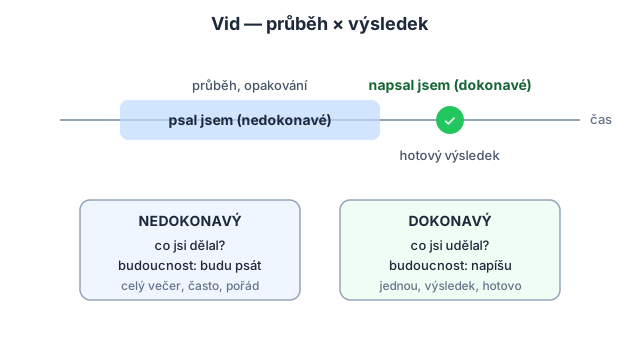
- The classic: *budu koupit → koupím; *budu udělat → udělám
- Reading udělám as present: it always points to the future
- Aspect misidentified: budu psát (will be writing) vs napíšu (will write and finish)
Common Error Patterns
budu combined with a perfective infinitive
Perfective = present form is already future; budu only with imperfectives
Perfective present form read as present tense
udělám/koupím always refer to the future
Zítra koupím lístky na vlak do Olomouce.
Tomorrow I will buy train tickets to Olomouc.
koupím: perfective present form = future, no budu.
O víkendu budu číst a v neděli večer ti zavolám.
At the weekend I will be reading, and on Sunday evening I will call you.
Both futures side by side: budu číst (imperf.) + zavolám (perf.).
Až přijedeš do Prahy, ukážu ti Vyšehrad.
When you come to Prague, I will show you Vyšehrad.
až + perfective future in time clauses about the future.
Practice in course
Apply this grammar in A2 course exercises
Frequently asked questions
- When is Budoucí čas dokonavých sloves used?
- Dokonavé sloveso nemá přítomný čas — jeho „přítomné" tvary znamenají budoucnost :
- How is Budoucí čas dokonavých sloves formed?
- Nikdy: *budu udělat, *budu koupit . Dokonavé sloveso + budu se vylučují. Zítra koupím lístky a večer ti zavolám. — obě slovesa dokonavá, obě o budoucnosti.
- What are common mistakes with Budoucí čas dokonavých sloves?
- The classic: *budu koupit → koupím ; *budu udělat → udělám Reading udělám as present: it always points to the future Aspect misidentified: budu psát (will be writing) vs napíšu (will write and finish)