VerbsA2
Aspect pairs
Imperfective/perfective verb pairs (dělat/udělat, psát/napsat, kupovat/koupit): process vs completed result and how to pick the right member
Learning Goal
I can choose between the imperfective and perfective member of common verb pairs to express process or result.
Exam Skills:CCE A2 · WritingCCE A2 · Speaking
Look at these examples. Can you spot the grammar pattern?
Celé odpoledne jsem vařil guláš, a nakonec jsem ho uvařil perfektně.
I was cooking goulash all afternoon, and in the end I cooked it perfectly.
Každý den kupuju rohlíky, ale dnes jsem koupil i koláče.
Every day I buy rolls, but today I also bought kolaches.
Psala diplomku tři roky. Napsala ji minulý týden.
She was writing her thesis for three years. She finished it last week.
Pay attention to the highlighted parts. What do they have in common?
Most Czech verbs come in pairs: an imperfective for the process or the habit, a perfective for one finished act. Once you accept that, two practical questions remain. How do I find a verb's partner? And which of the two does this sentence need?
How the pairs are built
| Imperfective | Perfective | How the pair is made |
|---|---|---|
| psát, vařit, platit | napsat, uvařit, zaplatit | a prefix makes the perfective |
| kupovat, dávat, vstávat | koupit, dát, vstát | the perfective is the basic verb; a suffix makes the imperfective |
| podepisovat, zapisovat | podepsat, zapsat | a prefixed perfective gets its own new imperfective |
| brát, říkat | vzít, říct | two different words |
The third row matters more than it looks. A prefix rarely just "finishes" a verb: it usually adds a meaning. Psát is "to write", but podepsat is "to sign", přepsat "to rewrite" and zapsat "to write down" or "to enrol". These are new verbs, and each gets its own imperfective with a suffix: podepisovat, přepisovat, zapisovat. Only napsat is the plain partner of psát. That is why a good dictionary marks every verb nedok. (imperfective) or dok. (perfective), and why pairs are best learnt together, like the gender of a noun. A few common verbs, such as být, mít and vědět, have no partner at all.
Which one? Signals in the sentence
| Pulls towards the imperfective | Pulls towards the perfective |
|---|---|
| how long: celý den, dvě hodiny, dlouho | how fast it was done: za dvě hodiny, už, konečně |
| how often: každý den, často, obvykle | a definite amount: celou knihu, dvě piva |
| after začít and přestat: Začal jsem se učit česky. | a result you can point to: Opravil jsem kolo, už jezdí. |
| a negative command: Nekupuj chleba, máme. | a positive request for one act: Kup chleba, prosím. |
Here English helps more than you might expect. "For two hours" and "in two hours" usually split along the aspect line: Psal jsem to dvě hodiny (I worked on it for two hours) against Napsal jsem to za dvě hodiny (I got it done in two hours). The exception is "in two hours" meaning "two hours from now": za dvě hodiny then takes either aspect (Za dvě hodiny budu vařit / uvařím). Questions split the same way: Co jsi dělal o víkendu? asks about your activities, Udělal jsi ten úkol? asks whether the job is done.
The one place English misleads is the simple past. "She wrote her thesis" can be either: Psala diplomku tři roky (the long work), Napsala ji za jedno léto (the finished result). Ask yourself whether you are looking at the activity or at the outcome, not whether English uses "-ing".
Apply this grammar in A2 course exercises
Practice Exercises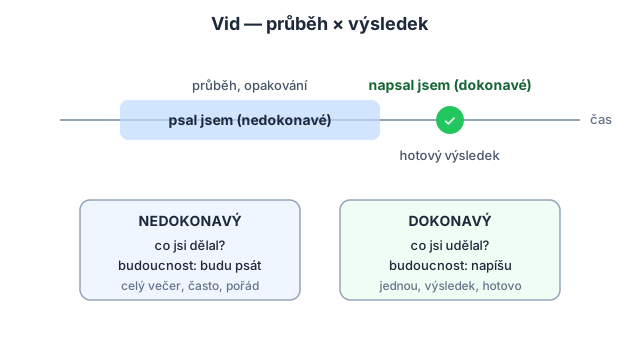
- EN/DE speakers use one verb for both meanings: choose by question — co jsi dělal? (imperf.) vs co jsi udělal? (perf.)
- Wrong prefix from RU/UK transfer: *zdělat → udělat
- Perfective with 'celý večer': *Napsal jsem dopis celý večer → Psal jsem (duration = imperfective)
Common Error Patterns
Wrong aspect for the context
Duration/repetition → imperfective; one-time result → perfective
Wrong pair member form (invented prefix)
Learn pairs as units: dělat/udělat, kupovat/koupit, brát/vzít
Celé odpoledne jsem vařil guláš, a nakonec jsem ho uvařil perfektně.
I was cooking goulash all afternoon, and in the end I cooked it perfectly.
vařil = process all afternoon; uvařil = the completed result.
Každý den kupuju rohlíky, ale dnes jsem koupil i koláče.
Every day I buy rolls, but today I also bought kolaches.
kupuju = habitual imperfective; koupil = one completed purchase.
Psala diplomku tři roky. Napsala ji minulý týden.
She was writing her thesis for three years. She finished it last week.
Three years of process (psala) vs the completion moment (napsala).
The check for this topic is still being prepared
Ask Sofi
Ready-made hints are free
Practice in course
Apply this grammar in A2 course exercises
Frequently asked questions
- When do you use Aspect pairs?
- Most Czech verbs come in pairs: an imperfective for the process or the habit, a perfective for one finished act. Once you accept that, two practical questions remain. How do I find a verb's partner? And which of the two does this sentence need?
- How do you form Aspect pairs?
- The third row matters more than it looks. A prefix rarely just "finishes" a verb: it usually adds a meaning. Psát is "to write", but podepsat is "to sign", přepsat "to rewrite" and zapsat "to write down" or "to enrol". These are new verbs, and each gets its own imperfective with a suffix: podepisovat, přepisovat, zapisovat . Only napsat is the plain partner of psát . That is why a good dictionary marks every verb nedok. (imperfective) or dok. (perfective), and why pairs are best learnt together, like the gender of a noun. A few common verbs, such as být, mít and vědět , have no partner at all. Here English helps more than you might expect.
- What are common mistakes with Aspect pairs?
- EN/DE speakers use one verb for both meanings: choose by question — co jsi dělal? (imperf.) vs co jsi udělal? (perf.) Wrong prefix from RU/UK transfer: *zdělat → udělat Perfective with 'celý večer': *Napsal jsem dopis celý večer → Psal jsem (duration = imperfective)