Будова реченняB1
Означальні підрядні (називний/знахідний)
Relative clauses with relative pronouns in nominative and accusative
Мета навчання
Can define people and things using relative clauses
Навички для іспиту:ЧитанняПисьмо
Подивіться на ці приклади. Чи можете ви помітити граматичну закономірність?
Die Frau, die neben mir sitzt, ist Ärztin.
The woman who sits next to me is a doctor.
Der Film, den wir gestern gesehen haben, war spannend.
The film we saw yesterday was exciting.
Das Kind, das im Garten spielt, ist mein Sohn.
The child playing in the garden is my son.
Die Bücher, die ich gekauft habe, sind interessant.
The books I bought are interesting.
Зверніть увагу на виділені частини. Що у них спільного?
Relative clauses add information about a noun. The relative pronoun matches the gender/number of the noun but takes its case from its function in the relative clause.
| Maskulin | Feminin | Neutrum | Plural | |
|---|---|---|---|---|
| Nominativ | der | die | das | die |
| Akkusativ | den | die | das | die |
Nominative: pronoun = subject: Der Mann, der dort steht, ist mein Lehrer.
Accusative: pronoun = object: Der Film, den ich gesehen habe, war gut.
Verb goes to end. Always separated by commas.
Застосуйте цю граматику у вправах курсу B1
Вправи для практики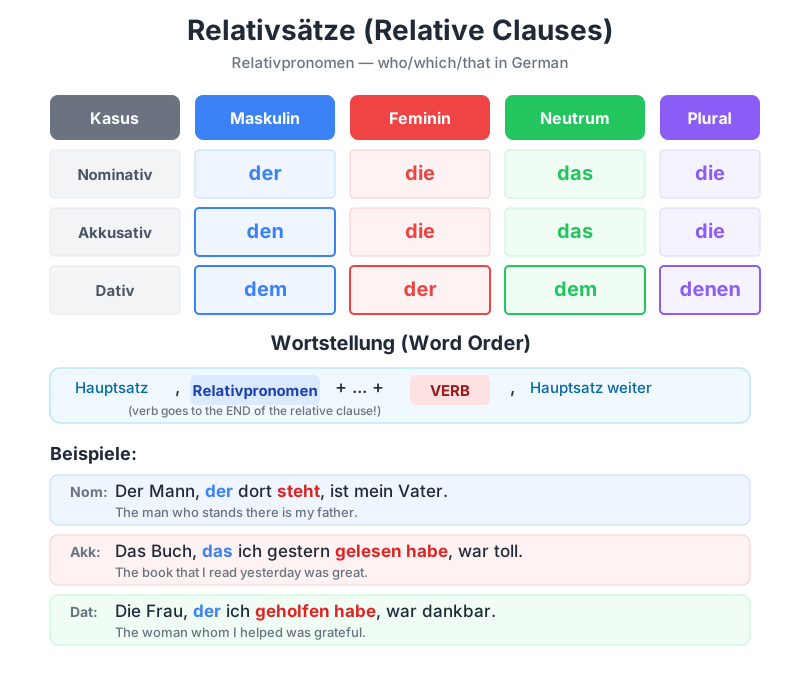
- Wrong case: ✗ Der Mann, der ich sehe → ✓ Der Mann, den ich sehe.
- Verb not at end: ✗ Die Frau, die kommt morgen → ✓ Die Frau, die morgen kommt.
- Missing comma: ✗ Das Buch das ich lese → ✓ Das Buch, das ich lese.
Типові помилки
Verb not in second position in main clause
Count positions: element 1 + VERB + rest. The verb is always second.
Wrong word order in subordinate clause
In subordinate clauses (weil, dass, wenn...) the verb goes to the END
Wrong connector or connector type used
Review: coordinating (und, aber, oder) vs subordinating (weil, dass, wenn) conjunctions
Die Frau, die neben mir sitzt, ist Ärztin.
The woman who sits next to me is a doctor.
Die = nominative (she sits). Frau is feminine.
Der Film, den wir gestern gesehen haben, war spannend.
The film we saw yesterday was exciting.
Den = accusative (we saw it). Film is masculine.
Das Kind, das im Garten spielt, ist mein Sohn.
The child playing in the garden is my son.
Das = nominative (it plays). Kind is neuter.
Die Bücher, die ich gekauft habe, sind interessant.
The books I bought are interesting.
Die = accusative plural (I bought them).
Практикувати в курсі
Застосуйте цю граматику у вправах курсу B1