Будова реченняA2
Порядок слів (час–спосіб дії–місце)
The temporal-modal-place word order rule
Мета навчання
Can order time, manner, and place correctly in sentences
Навички для іспиту:ЧитанняПисьмо
Подивіться на ці приклади. Чи можете ви помітити граматичну закономірність?
Ich fahre morgen mit dem Zug nach Berlin.
I'm taking the train to Berlin tomorrow.
Sie geht jeden Tag gern ins Fitnessstudio.
She likes going to the gym every day.
Wir essen heute Abend zusammen im Restaurant.
We're eating together at the restaurant tonight.
Ich gebe es ihm morgen.
I'll give it to him tomorrow.
Зверніть увагу на виділені частини. Що у них спільного?
The middle field follows: Temporal → Modal → Platz (Time → Manner → Place).
| T (Wann?) | M (Wie?) | P (Wo/Wohin?) |
|---|---|---|
| heute | schnell | nach Hause |
| morgen | mit dem Bus | zur Schule |
| um 8 Uhr | gern | ins Kino |
Example: Ich fahre morgen (T) mit dem Zug (M) nach Berlin (P).
TMP is a strong tendency, not absolute. Deviation signals emphasis.
Pronoun order: Nouns: dative before accusative. Pronouns: accusative before dative.
Застосуйте цю граматику у вправах курсу A2
Вправи для практики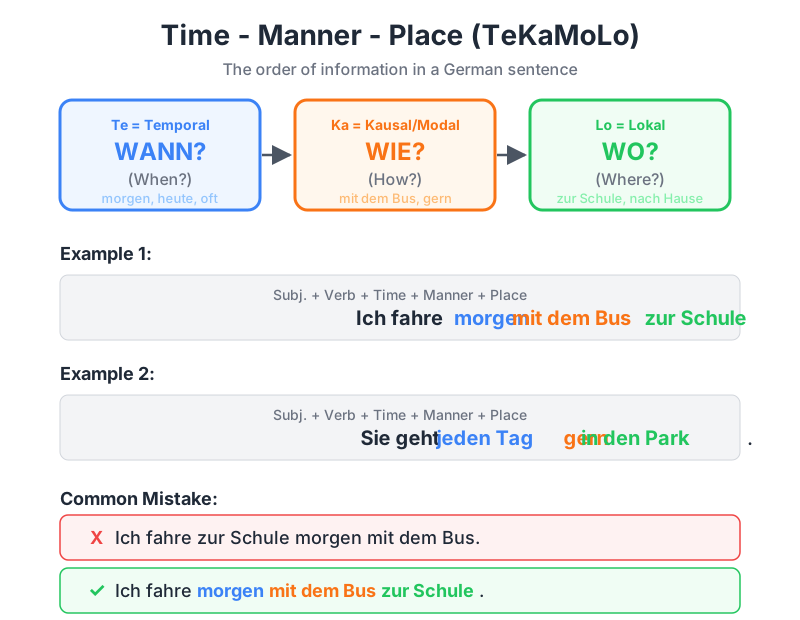
- Place before time: ✗ Ich fahre nach Berlin morgen → ✓ Ich fahre morgen nach Berlin.
- Random adverb placement: Follow T-M-P for neutral order.
- Wrong pronoun order: ✗ Ich gebe ihm es → ✓ Ich gebe es ihm.
Типові помилки
Verb not in second position in main clause
Count positions: element 1 + VERB + rest. The verb is always second.
Wrong word order in subordinate clause
In subordinate clauses (weil, dass, wenn...) the verb goes to the END
Wrong connector or connector type used
Review: coordinating (und, aber, oder) vs subordinating (weil, dass, wenn) conjunctions
Ich fahre morgen mit dem Zug nach Berlin.
I'm taking the train to Berlin tomorrow.
TMP: morgen (T) + mit dem Zug (M) + nach Berlin (P).
Sie geht jeden Tag gern ins Fitnessstudio.
She likes going to the gym every day.
TMP: jeden Tag (T) + gern (M) + ins Fitnessstudio (P).
Wir essen heute Abend zusammen im Restaurant.
We're eating together at the restaurant tonight.
TMP: heute Abend (T) + zusammen (M) + im Restaurant (P).
Ich gebe es ihm morgen.
I'll give it to him tomorrow.
Pronouns: accusative (es) before dative (ihm).
Практикувати в курсі
Застосуйте цю граматику у вправах курсу A2