Cấu trúc câuA2
TMP-Wortstellung
The temporal-modal-place word order rule
Mục tiêu học tập
Can order time, manner, and place correctly in sentences
Kỹ năng thi cử:ĐọcViết
Hãy xem các ví dụ sau. Bạn có nhận ra quy tắc ngữ pháp không?
Ich fahre morgen mit dem Zug nach Berlin.
I'm taking the train to Berlin tomorrow.
Sie geht jeden Tag gern ins Fitnessstudio.
She likes going to the gym every day.
Wir essen heute Abend zusammen im Restaurant.
We're eating together at the restaurant tonight.
Ich gebe es ihm morgen.
I'll give it to him tomorrow.
Chú ý các phần được đánh dấu. Chúng có điểm gì chung?
The middle field follows: Temporal → Modal → Platz (Time → Manner → Place).
| T (Wann?) | M (Wie?) | P (Wo/Wohin?) |
|---|---|---|
| heute | schnell | nach Hause |
| morgen | mit dem Bus | zur Schule |
| um 8 Uhr | gern | ins Kino |
Example: Ich fahre morgen (T) mit dem Zug (M) nach Berlin (P).
TMP is a strong tendency, not absolute. Deviation signals emphasis.
Pronoun order: Nouns: dative before accusative. Pronouns: accusative before dative.
Áp dụng ngữ pháp này vào các bài tập khóa học A2
Bài tập thực hành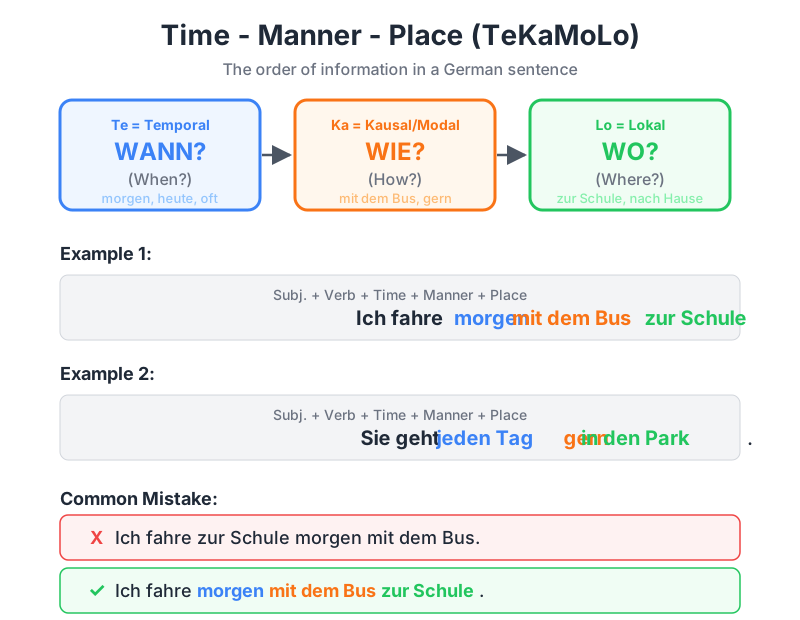
- Place before time: ✗ Ich fahre nach Berlin morgen → ✓ Ich fahre morgen nach Berlin.
- Random adverb placement: Follow T-M-P for neutral order.
- Wrong pronoun order: ✗ Ich gebe ihm es → ✓ Ich gebe es ihm.
Các lỗi thường gặp
Verb not in second position in main clause
Count positions: element 1 + VERB + rest. The verb is always second.
Wrong word order in subordinate clause
In subordinate clauses (weil, dass, wenn...) the verb goes to the END
Wrong connector or connector type used
Review: coordinating (und, aber, oder) vs subordinating (weil, dass, wenn) conjunctions
Ich fahre morgen mit dem Zug nach Berlin.
I'm taking the train to Berlin tomorrow.
TMP: morgen (T) + mit dem Zug (M) + nach Berlin (P).
Sie geht jeden Tag gern ins Fitnessstudio.
She likes going to the gym every day.
TMP: jeden Tag (T) + gern (M) + ins Fitnessstudio (P).
Wir essen heute Abend zusammen im Restaurant.
We're eating together at the restaurant tonight.
TMP: heute Abend (T) + zusammen (M) + im Restaurant (P).
Ich gebe es ihm morgen.
I'll give it to him tomorrow.
Pronouns: accusative (es) before dative (ihm).
Luyện tập trong khóa học
Áp dụng ngữ pháp này vào các bài tập khóa học A2