'Es gibt' + Akkusativ
There is/there are with accusative
Can describe what exists in a place using es gibt
Look at these examples. Can you spot the grammar pattern?
Es gibt einen Supermarkt in der Nähe.
There is a supermarket nearby.
Gibt es hier eine Bank?
Is there a bank here?
In der Stadt gibt es viele Museen.
There are many museums in the city.
Pay attention to the highlighted parts. What do they have in common?
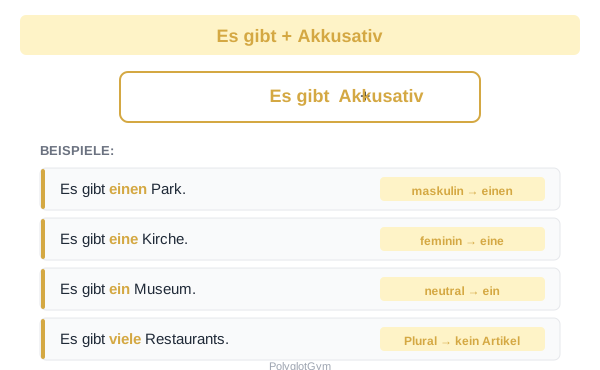
Es gibt bedeutet there is / there are und steht immer mit dem Akkusativ.
| Struktur | Beispiel |
|---|---|
| Es gibt + Akk. (maskulin) | Es gibt einen Park. |
| Es gibt + Akk. (feminin) | Es gibt eine Schule. |
| Es gibt + Akk. (neutrum) | Es gibt ein Kino. |
| Es gibt + Akk. (Plural) | Es gibt viele Restaurants. |
| Verneinung | Es gibt keine Bibliothek. |
Unveränderlich: Es gibt ändert sich nicht für Singular oder Plural — kein es geben!
Fragen: Gibt es hier einen Supermarkt? Was gibt es zum Frühstück?
Common Error Patterns
Verb not in second position in main clause
Count positions: element 1 + VERB + rest. The verb is always second.
Wrong word order in subordinate clause
In subordinate clauses (weil, dass, wenn...) the verb goes to the END
Wrong connector or connector type used
Review: coordinating (und, aber, oder) vs subordinating (weil, dass, wenn) conjunctions
Es gibt einen Supermarkt in der Nähe.
There is a supermarket nearby.
Supermarkt is masculine: ein → einen (accusative).
Gibt es hier eine Bank?
Is there a bank here?
Question form: Gibt es...? Eine stays eine (feminine accusative = nominative).
In der Stadt gibt es viele Museen.
There are many museums in the city.
Es gibt works for plural too — viele Museen (accusative plural).
Prerequisites
Also in Sentence Structure
Leads to
Practice in course
Apply this grammar in A1 course exercises