Modalverb-Satzrahmen
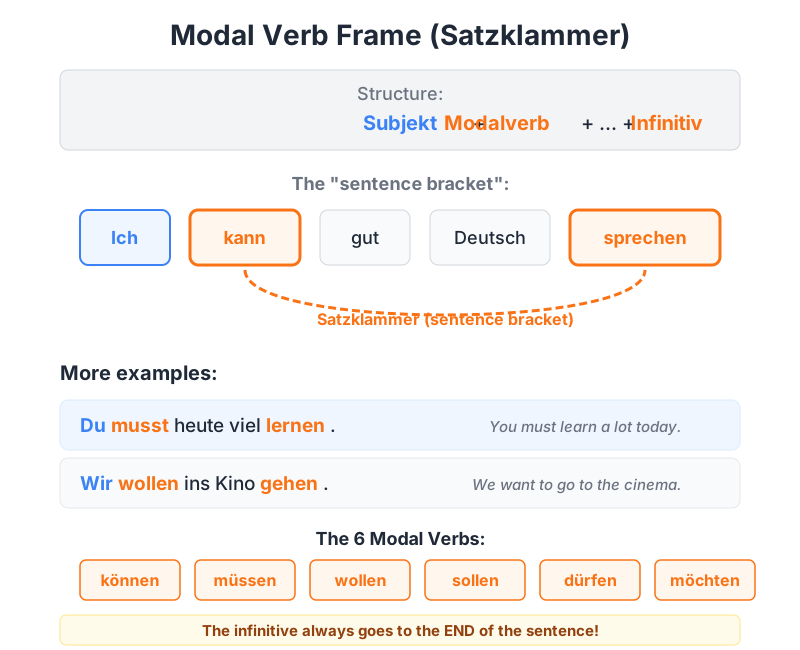
Modal verb at position 2, infinitive at the end
Can build sentences with modal verb and final infinitive
Look at these examples. Can you spot the grammar pattern?
Ich muss morgen früh aufstehen.
I have to get up early tomorrow.
Du darfst hier nicht rauchen.
You are not allowed to smoke here.
Wir wollen am Samstag ins Kino gehen.
We want to go to the cinema on Saturday.
Pay attention to the highlighted parts. What do they have in common?
Modalverben bilden eine Satzklammer: Das Modalverb steht an Position 2, der Infinitiv am Satzende.
| Position 1 | Position 2 (Modal) | Mittelfeld | Satzende (Infinitiv) |
|---|---|---|---|
| Ich | muss | heute viel | arbeiten. |
| Du | kannst | gut Deutsch | sprechen. |
| Wir | möchten | morgen ins Kino | gehen. |
| Er | darf | hier nicht | rauchen. |
Mittelfeld: Zwischen Modal und Infinitiv stehen alle anderen Satzglieder: Zeit, Objekte, Adverbien, Negation.
In Fragen: Modal an Position 1: Kannst du mir helfen?
Tipp: Die Satzklammer ist ein Grundprinzip des Deutschen — sie gilt auch für trennbare Verben und das Perfekt.
Common Error Patterns
Verb not in second position in main clause
Count positions: element 1 + VERB + rest. The verb is always second.
Wrong word order in subordinate clause
In subordinate clauses (weil, dass, wenn...) the verb goes to the END
Wrong connector or connector type used
Review: coordinating (und, aber, oder) vs subordinating (weil, dass, wenn) conjunctions
Ich muss morgen früh aufstehen.
I have to get up early tomorrow.
Muss at position 2, aufstehen at the end. Morgen früh goes in between.
Du darfst hier nicht rauchen.
You are not allowed to smoke here.
Darfst at position 2, nicht and hier in the middle, rauchen at the end.
Wir wollen am Samstag ins Kino gehen.
We want to go to the cinema on Saturday.
Wollen at position 2, am Samstag and ins Kino in the middle, gehen at the end.
Prerequisites
Also in Sentence Structure
Practice in course
Apply this grammar in A1 course exercises