Negation mit 'kein'
Negating nouns with kein/keine/keinen
Can negate nouns using kein/keine
Look at these examples. Can you spot the grammar pattern?
Ich habe kein Geld.
I have no money.
Das ist keine gute Idee.
That is not a good idea.
Ich habe keinen Hunger.
I am not hungry.
Pay attention to the highlighted parts. What do they have in common?
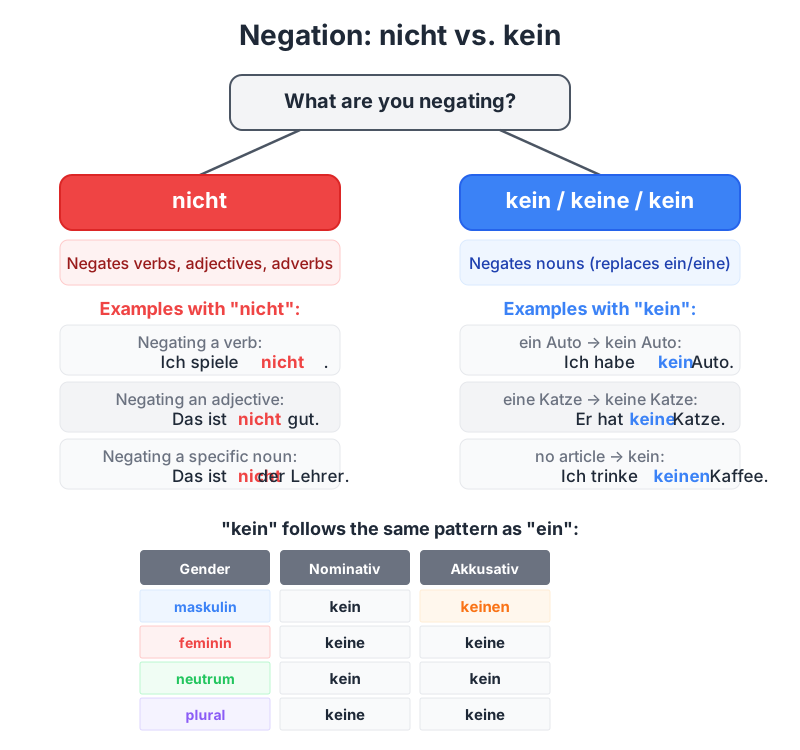
Kein verneint Nomen und ersetzt den unbestimmten Artikel ein/eine oder den Nullartikel.
Deklination von kein:
| Maskulin | Feminin | Neutrum | Plural | |
|---|---|---|---|---|
| Nominativ | kein | keine | kein | keine |
| Akkusativ | keinen | keine | kein | keine |
Verwendung: Ich habe ein Auto → Ich habe kein Auto. Er hat Kinder → Er hat keine Kinder.
Nicht vs. kein: Kein für Nomen, nicht für alles andere (Verben, Adjektive, Adverbien): Ich habe kein Geld. vs. Ich komme nicht.
Common Error Patterns
Verb not in second position in main clause
Count positions: element 1 + VERB + rest. The verb is always second.
Wrong word order in subordinate clause
In subordinate clauses (weil, dass, wenn...) the verb goes to the END
Wrong connector or connector type used
Review: coordinating (und, aber, oder) vs subordinating (weil, dass, wenn) conjunctions
Ich habe kein Geld.
I have no money.
Geld (neuter) takes kein in nominative/accusative.
Das ist keine gute Idee.
That is not a good idea.
Idee is feminine: eine → keine.
Ich habe keinen Hunger.
I am not hungry.
Hunger is masculine accusative: einen → keinen.
Prerequisites
Also in Sentence Structure
Practice in course
Apply this grammar in A1 course exercises