W-Fragen
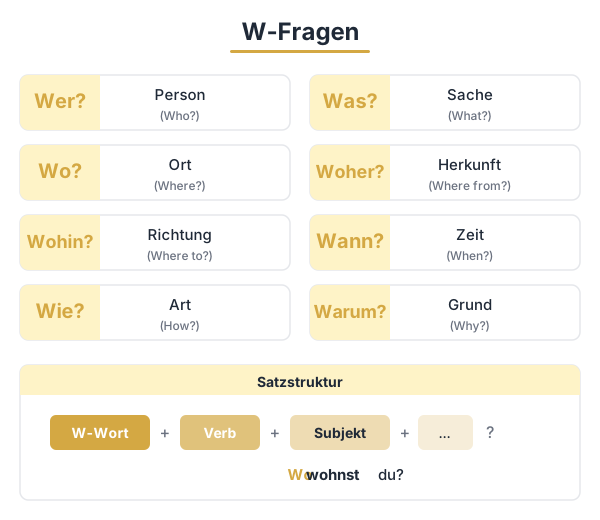
Question words: wie, wo, woher, was, wer
Can ask basic questions about personal information
Look at these examples. Can you spot the grammar pattern?
Wie heißen Sie?
What is your name? (formal)
Woher kommst du?
Where do you come from?
Was machst du beruflich?
What do you do for a living?
Pay attention to the highlighted parts. What do they have in common?
W-Fragen beginnen mit einem Fragewort und erwarten eine inhaltliche Antwort (nicht ja/nein).
Die wichtigsten W-Fragewörter:
| W-Wort | Bedeutung | Beispiel |
|---|---|---|
| wie | how | Wie heißen Sie? |
| wo | where | Wo wohnen Sie? |
| woher | where from | Woher kommen Sie? |
| was | what | Was machen Sie? |
| wer | who | Wer ist das? |
| wann | when | Wann kommst du? |
| warum | why | Warum lernst du Deutsch? |
Wortstellung: W-Wort + Verb (Position 2) + Subjekt + Rest: Wo wohnst du?
Tipp: Wie kombiniert sich oft: wie alt (how old), wie viel (how much), wie lange (how long).
Common Error Patterns
Verb not in second position in main clause
Count positions: element 1 + VERB + rest. The verb is always second.
Wrong word order in subordinate clause
In subordinate clauses (weil, dass, wenn...) the verb goes to the END
Wrong connector or connector type used
Review: coordinating (und, aber, oder) vs subordinating (weil, dass, wenn) conjunctions
Wie heißen Sie?
What is your name? (formal)
Wie (how) + verb at position 2 + subject.
Woher kommst du?
Where do you come from?
Woher asks about origin, not current location.
Was machst du beruflich?
What do you do for a living?
Was (what) asks about things or activities.
Prerequisites
Also in Sentence Structure
Leads to
Practice in course
Apply this grammar in A1 course exercises