Regelmäßige Verbkonjugation
Conjugating regular verbs like heißen, kommen
Can introduce themselves using simple present tense verbs
Look at these examples. Can you spot the grammar pattern?
Ich heiße Anna.
My name is Anna.
Woher kommst du?
Where do you come from?
Wir lernen Deutsch.
We are learning German.
Pay attention to the highlighted parts. What do they have in common?
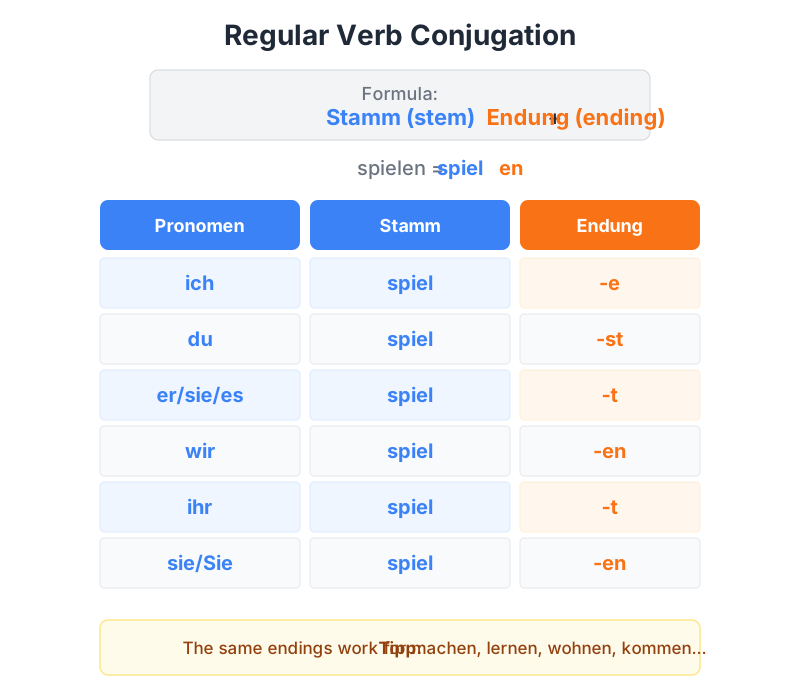
Die meisten deutschen Verben sind regelmäßig — sie folgen einem festen Konjugationsmuster im Präsens.
Bildung: Infinitiv-Endung -en entfernen → Stamm. Dann Endungen anhängen:
| Person | Endung | kommen | machen |
|---|---|---|---|
| ich | -e | komme | mache |
| du | -st | kommst | machst |
| er/sie/es | -t | kommt | macht |
| wir | -en | kommen | machen |
| ihr | -t | kommt | macht |
| sie/Sie | -en | kommen | machen |
Wichtig: Die wir- und sie/Sie-Formen sind immer identisch mit dem Infinitiv.
Häufige regelmäßige Verben: wohnen, lernen, spielen, hören, trinken, kaufen, fragen, gehen.
Common Error Patterns
Incorrect verb ending for the subject
Review verb conjugation tables and practice matching endings to pronouns
Forgot stem vowel change in irregular verbs
Practice stem-changing verbs (e→i, e→ie, a→ä) with flashcards
Verb placed in wrong position
Remember: V2 in main clauses, verb-final in subordinate clauses
Ich heiße Anna.
My name is Anna.
heißen: ich heiße — the ß counts as a double consonant, stem heiß + -e.
Woher kommst du?
Where do you come from?
kommen: du kommst — stem komm + ending -st.
Wir lernen Deutsch.
We are learning German.
lernen: wir lernen — the wir-form is identical to the infinitive.
Prerequisites
Also in Verbs
Practice in course
Apply this grammar in A1 course exercises