ГлаголыB2
Пассив с модальными глаголами
Пассив в сочетании с модальными глаголами
Цель обучения
Я умею сочетать пассив с модальными глаголами в официальных текстах.
Экзаменационные навыки:ЧтениеПисьмо
Посмотрите на эти примеры. Можете ли вы заметить грамматическую закономерность?
Das Formular muss bis morgen ausgefüllt werden.
The form must be filled out by tomorrow.
Das Problem kann gelöst werden.
The problem can be solved.
Die Aufgabe sollte bis Freitag erledigt werden.
The task should be completed by Friday.
Der Text darf nicht verändert werden.
The text may not be changed.
Обратите внимание на выделенные части. Что у них общего?
Русское «бланк должен быть заполнен» и немецкое Das Formular muss ausgefüllt werden устроены одинаково: модальный глагол + «быть» + причастие. Только немецкое «быть» здесь - werden, и стоит оно в самом конце: модальный + ... + Partizip II + werden.
| Aktiv | Passiv с модальным |
|---|---|
| Man muss das Formular ausfüllen. | Das Formular muss ausgefüllt werden. |
| Man kann das Problem lösen. | Das Problem kann gelöst werden. |
| Man soll die Regel beachten. | Die Regel soll beachtet werden. |
Схема: подлежащее + модальный (спрягается) + ... + Partizip II + werden (инфинитив, последним).
Прошедшее: в претерит уходит только модальный: Das Formular musste ausgefüllt werden - бланк нужно было заполнить.
Это язык инструкций, регламентов и научных текстов: darf nicht verändert werden - «не подлежит изменению», muss beachtet werden - «необходимо соблюдать». Русский канцелярит здесь звучит очень похоже, что облегчает перевод в обе стороны.
Закрепите эту грамматику в упражнениях курса B2
Упражнения для практики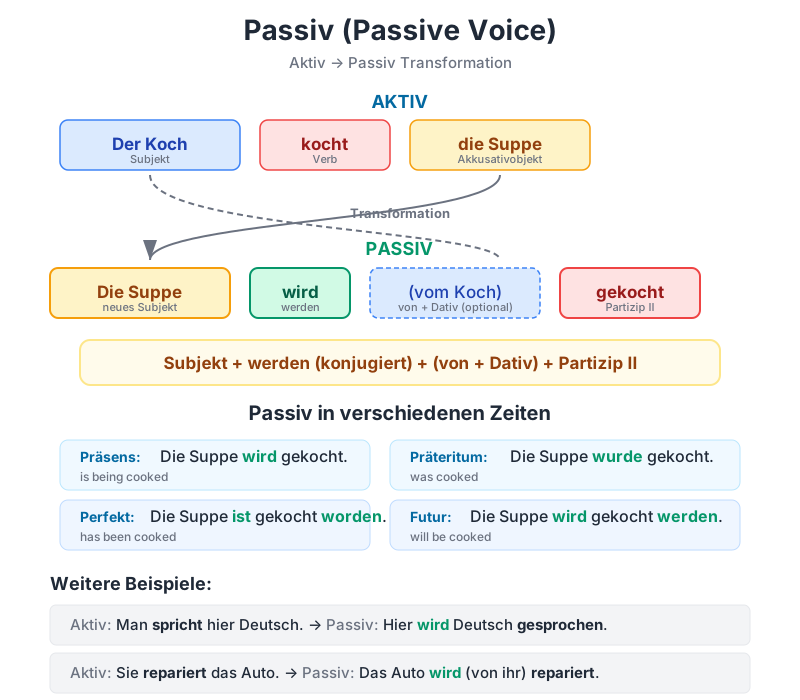
- Причастие от werden вместо инфинитива: ✗ muss gebaut geworden, ✗ muss gebaut worden → ✓ muss gebaut werden.
- Порядок в конце предложения: сначала Partizip II, потом werden: ✗ muss werden ausgefüllt → ✓ muss ausgefüllt werden.
- Sein и werden по одной русской модели «должен быть»: muss ausgefüllt werden = надо заполнить (действие), muss ausgefüllt sein = должен быть уже заполнен к сроку (состояние). Обе формы верны, значения разные.
Частые ошибки
Incorrect verb ending for the subject
Review verb conjugation tables and practice matching endings to pronouns
Forgot stem vowel change in irregular verbs
Practice stem-changing verbs (e→i, e→ie, a→ä) with flashcards
Verb placed in wrong position
Remember: V2 in main clauses, verb-final in subordinate clauses
Das Formular muss bis morgen ausgefüllt werden.
The form must be filled out by tomorrow.
Muss + Partizip II + werden.
Das Problem kann gelöst werden.
The problem can be solved.
Kann + Partizip II + werden.
Die Aufgabe sollte bis Freitag erledigt werden.
The task should be completed by Friday.
Sollte (Konj. II) + passive = polite instruction.
Der Text darf nicht verändert werden.
The text may not be changed.
Darf nicht + passive = prohibition.
Практика в курсе
Закрепите эту грамматику в упражнениях курса B2
Часто задаваемые вопросы
- Когда используется Пассив с модальными глаголами?
- Русское «бланк должен быть заполнен» и немецкое Das Formular muss ausgefüllt werden устроены одинаково: модальный глагол + «быть» + причастие. Только немецкое «быть» здесь - werden , и стоит оно в самом конце: модальный + ... + Partizip II + werden .
- Как образуется Пассив с модальными глаголами?
- Схема: подлежащее + модальный (спрягается) + ... + Partizip II + werden (инфинитив, последним). Прошедшее: в претерит уходит только модальный: Das Formular musste ausgefüllt werden - бланк нужно было заполнить. Это язык инструкций, регламентов и научных текстов: darf nicht verändert werden - «не подлежит изменению», muss beachtet werden - «необходимо соблюдать». Русский канцелярит здесь звучит очень похоже, что облегчает перевод в обе стороны.
- Какие типичные ошибки с Пассив с модальными глаголами?
- Причастие от werden вместо инфинитива: ✗ muss gebaut geworden , ✗ muss gebaut worden → ✓ muss gebaut werden . Порядок в конце предложения: сначала Partizip II, потом werden: ✗ muss werden ausgefüllt → ✓ muss ausgefüllt werden . Sein и werden по одной русской модели «должен быть»: muss ausgefüllt werden = надо заполнить (действие), muss ausgefüllt sein = должен быть уже заполнен к сроку (состояние). Обе формы верны, значения разные.