Структура предложенияB1
Относительные придаточные (именительный/винительный)
Относительные придаточные с местоимением в именительном и винительном падеже
Цель обучения
Я умею описывать людей и предметы с помощью относительных придаточных.
Экзаменационные навыки:ЧтениеПисьмо
Посмотрите на эти примеры. Можете ли вы заметить грамматическую закономерность?
Die Frau, die neben mir sitzt, ist Ärztin.
The woman who sits next to me is a doctor.
Der Film, den wir gestern gesehen haben, war spannend.
The film we saw yesterday was exciting.
Das Kind, das im Garten spielt, ist mein Sohn.
The child playing in the garden is my son.
Die Bücher, die ich gekauft habe, sind interessant.
The books I bought are interesting.
Обратите внимание на выделенные части. Что у них общего?
Немецкое относительное местоимение ведёт себя в точности как русское «который»: род и число берёт у существительного, к которому относится, а падеж - от своей роли в придаточном. Кто помнит, как работает «который / которую / которого», тому осталось выучить формы и одно правило порядка слов.
| м.р. | ж.р. | ср.р. | мн.ч. | |
|---|---|---|---|---|
| Nominativ | der | die | das | die |
| Akkusativ | den | die | das | die |
Именительный - местоимение само что-то делает: Der Mann, der dort steht, ist mein Lehrer - мужчина, который там стоит.
Винительный - местоимение является объектом: Der Film, den ich gesehen habe, war gut - фильм, который я видел. Русское «который» здесь не изменилось (неодушевлённый мужской род), а немецкое der → den изменилось - обычный винительный мужского рода.
Что не совпадает с русским: глагол придаточного уходит в конец. Запятые - обязательны с обеих сторон, как и в русском.
Закрепите эту грамматику в упражнениях курса B1
Упражнения для практики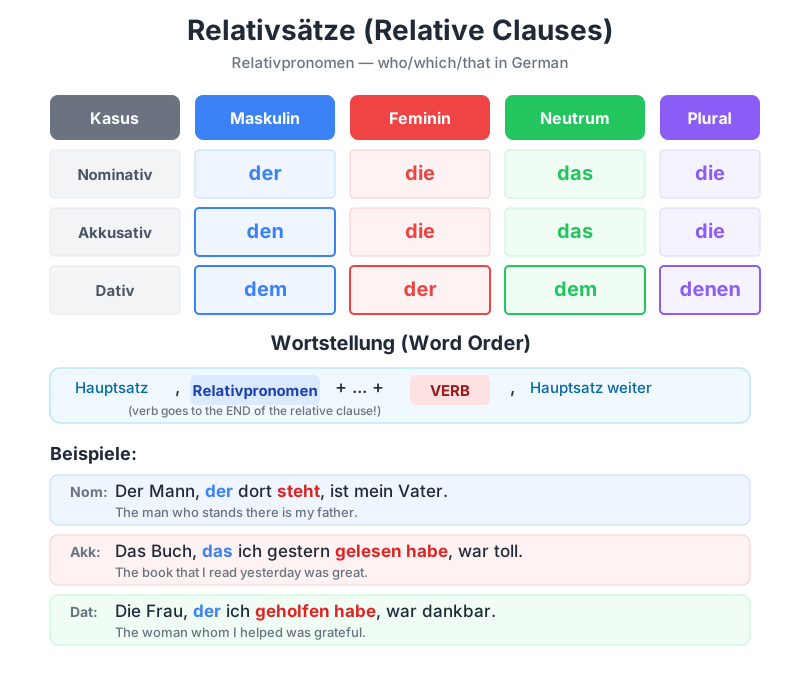
- Падеж взят у главного предложения, а не у придаточного: ✗ Der Mann, der ich sehe → ✓ Der Mann, den ich sehe. Спросите: «которого я вижу» - винительный.
- Глагол не в конце: ✗ Die Frau, die kommt morgen → ✓ Die Frau, die morgen kommt.
- Welcher по школьной привычке: welcher, welche, welches грамматически возможны, но в живой речи почти не встречаются; используйте der / die / das.
Частые ошибки
Verb not in second position in main clause
Count positions: element 1 + VERB + rest. The verb is always second.
Wrong word order in subordinate clause
In subordinate clauses (weil, dass, wenn...) the verb goes to the END
Wrong connector or connector type used
Review: coordinating (und, aber, oder) vs subordinating (weil, dass, wenn) conjunctions
Die Frau, die neben mir sitzt, ist Ärztin.
The woman who sits next to me is a doctor.
Die = nominative (she sits). Frau is feminine.
Der Film, den wir gestern gesehen haben, war spannend.
The film we saw yesterday was exciting.
Den = accusative (we saw it). Film is masculine.
Das Kind, das im Garten spielt, ist mein Sohn.
The child playing in the garden is my son.
Das = nominative (it plays). Kind is neuter.
Die Bücher, die ich gekauft habe, sind interessant.
The books I bought are interesting.
Die = accusative plural (I bought them).
Практика в курсе
Закрепите эту грамматику в упражнениях курса B1
Часто задаваемые вопросы
- Когда используется Относительные придаточные (именительный/винительный)?
- Немецкое относительное местоимение ведёт себя в точности как русское «который» : род и число берёт у существительного, к которому относится, а падеж - от своей роли в придаточном . Кто помнит, как работает «который / которую / которого», тому осталось выучить формы и одно правило порядка слов.
- Как образуется Относительные придаточные (именительный/винительный)?
- Именительный - местоимение само что-то делает: Der Mann, der dort steht, ist mein Lehrer - мужчина, который там стоит. Винительный - местоимение является объектом: Der Film, den ich gesehen habe, war gut - фильм, который я видел. Русское «который» здесь не изменилось (неодушевлённый мужской род), а немецкое der → den изменилось - обычный винительный мужского рода. Что не совпадает с русским: глагол придаточного уходит в конец . Запятые - обязательны с обеих сторон, как и в русском.
- Какие типичные ошибки с Относительные придаточные (именительный/винительный)?
- Падеж взят у главного предложения, а не у придаточного: ✗ Der Mann, der ich sehe → ✓ Der Mann, den ich sehe . Спросите: «которого я вижу» - винительный. Глагол не в конце: ✗ Die Frau, die kommt morgen → ✓ Die Frau, die morgen kommt . Welcher по школьной привычке: welcher, welche, welches грамматически возможны, но в живой речи почти не встречаются; используйте der / die / das.