Modalverb 'müssen'
müssen for obligation and necessity
Can express obligation and necessity with müssen
Look at these examples. Can you spot the grammar pattern?
Ich muss morgen früh aufstehen.
I have to get up early tomorrow.
Du musst nicht kommen.
You don't have to come.
Wir müssen jetzt los.
We have to go now.
Pay attention to the highlighted parts. What do they have in common?
Müssen drückt Pflicht oder Notwendigkeit aus (must, have to).
| Person | Form | Person | Form |
|---|---|---|---|
| ich | muss | wir | müssen |
| du | musst | ihr | müsst |
| er/sie/es | muss | sie/Sie | müssen |
Verwendung: Ich muss jetzt gehen. Du musst mehr lernen.
Achtung bei Verneinung:
| Deutsch | Englisch | Bedeutung |
|---|---|---|
| nicht müssen | don't have to | Du musst nicht kommen. (optional) |
| nicht dürfen | must not | Du darfst nicht rauchen. (verboten) |
Nicht müssen ≠ must not! Dieser Fehler ist sehr häufig.
Common Error Patterns
Incorrect verb ending for the subject
Review verb conjugation tables and practice matching endings to pronouns
Forgot stem vowel change in irregular verbs
Practice stem-changing verbs (e→i, e→ie, a→ä) with flashcards
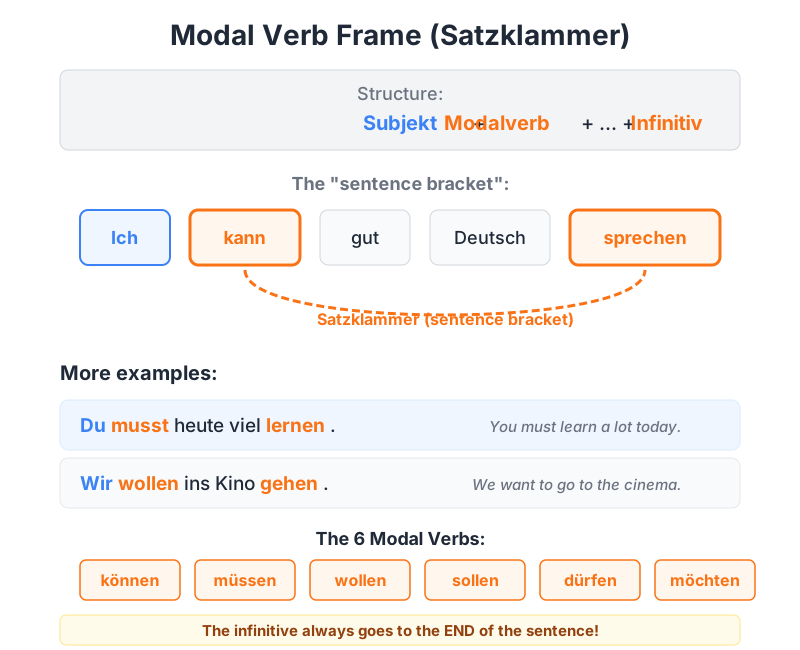
Verb placed in wrong position
Remember: V2 in main clauses, verb-final in subordinate clauses
Ich muss morgen früh aufstehen.
I have to get up early tomorrow.
Müssen expresses necessity: muss + infinitive at the end.
Du musst nicht kommen.
You don't have to come.
Nicht müssen = don't have to (optional), NOT 'must not'.
Wir müssen jetzt los.
We have to go now.
Losmüssen — colloquial for 'have to leave': los replaces a full infinitive.
Prerequisites
Also in Verbs
Practice in course
Apply this grammar in A1 course exercises